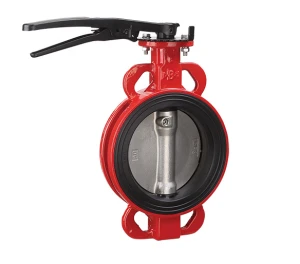
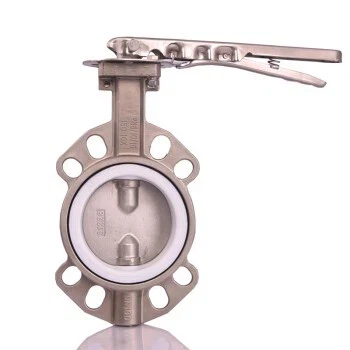
When designing piping systems or managing industrial procurement projects, selecting the right valves is not merely a technical detail; it is a critical decision that impacts system safety, operational efficiency, and long-term maintenance costs. Among the wide variety of industrial valves, globe valves (commonly known as globe valves) and butterfly valves are the two most widely used types.
Although both are used to control the flow of liquids and gases, their operating principles are fundamentally different, and they are suited for vastly different operating environments. Selecting the wrong valve type can lead to premature valve failure, excessive pressure drop, or project delays.
Whether you are an EPC contractor, a piping engineer, or an industrial distributor, understanding the technical characteristics of each valve is crucial. In this guide, we will detail the structural differences, operating principles, performance metrics, and ideal application scenarios for globe valves and butterfly valves, helping you make the most precise and cost-effective choice for your next project.
As a leading industrial valve manufacturer in China, Tianjin Outshine Valve has been dedicated to providing high-performance flow control solutions to global partners for decades. Our engineering team combines extensive field experience with rigorous manufacturing standards to bring you this authoritative comparative analysis.
Operating Principles and Structural Analysis
To understand why these two types of valves exhibit such distinct performance characteristics in industrial piping systems, we must examine their internal structures and mechanical operating principles in detail. Evaluating the core design of the valves is the first step toward preventing premature system failure and minimizing downtime.
Globe Valves (Industrial Shut-Off Valves)
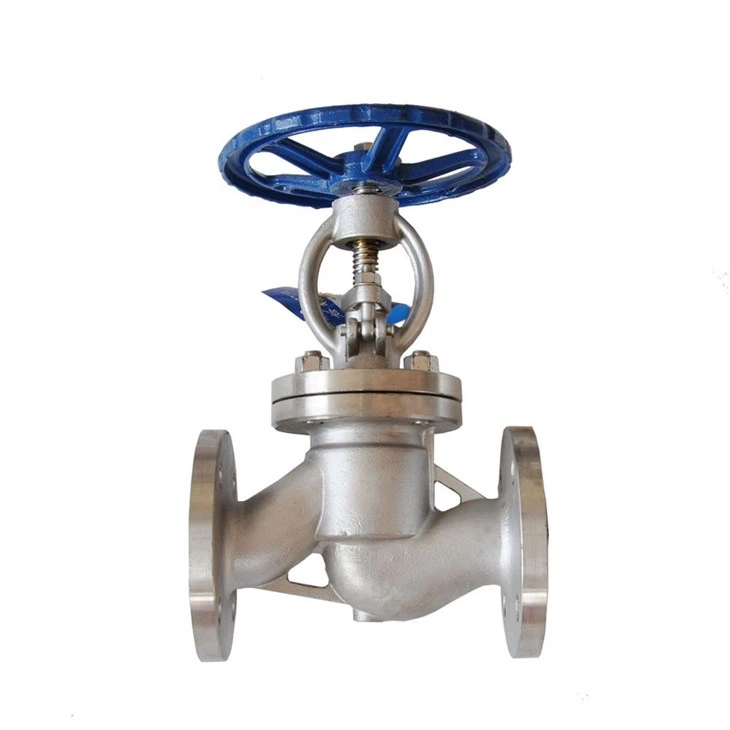
A globe valve is a linear-motion valve primarily engineered for starting, stopping, and regulating fluid flow. Its name originates from its traditional spherical body shape, though modern engineering has optimized the exterior casing while maintaining its classic internal configuration.
Detailed Structure & Main Components
The structural integrity of a heavy-duty industrial shut-off valve relies on five major components:
Valve Body and Bonnet: Cast or forged from high-grade materials (such as WCB, CF8, or CF8M) to withstand high pressure ratings. The body houses the internal fluid channels.
The Valve Stem: A precision-machined threaded rod that connects the handwheel or actuator to the internal disc, translating rotary input into linear lifting or lowering motion.
The Disc (Plug): The actual movable obstruction placed in the flow path. It can be designed as a needle plug, a parabolic plug, or a flat disc depending on the level of flow modulation required.
The Valve Seat: Positioned parallel to the line of flow, the seat provides a machined surface where the disc lands to form a tight, leak-proof seal.
Stem Packing: A sealing assembly that prevents process media from escaping into the atmosphere along the moving stem.
Internal Working Principle
The defining technical trait of an industrial shut-off valve is its tortuous, "S-shaped" internal fluid pathway. When fluid enters the valve, it cannot pass straight through; instead, it is forced to make two sharp 90° turns to exit.
Operation is executed through linear stem motion. As the operator rotates the handwheel, the stem moves vertically, pushing the disc straight down onto the seat or pulling it directly away. Because the disc moves perpendicular to the seat, the closing mechanism relies on direct, high-torque mechanical seating pressure. When fully closed, the disc completely blocks the fluid orifice. This direct contact ensures an exceptionally tight seal, making globe valves the industry standard for positive isolation and critical shut-off applications.
Butterfly Valves (Quarter-Turn Rotary Valves)
A butterfly valve is a rotary-motion valve that requires only a quarter-turn 90° rotation of its closing element to completely open, close, or regulate fluid flow through a pipeline.
Detailed Structure & Main Components
Unlike linear valves, quarter-turn butterfly valves feature a highly compact, lightweight architecture consisting of four essential parts:
Valve Body: Typically manufactured in wafer type butterfly valve, lug type butterfly valve, or flanged configurations. Its face-to-face dimension is extremely narrow compared to a globe valve.
The Disc: A flat, circular plate mounted directly in the center of the pipe. The disc acts as the closing element and always remains within the flow stream.
The Stem (Shaft): A solid shaft that passes through the disc to drive its rotation. It can be a single piece or a split-shaft design depending on the valve torque requirements.
The Seat: A resilient elastomeric liner (like EPDM, NBR, or Viton) or a high-performance laminated metal seat that lines the inner circumference of the valve body to ensure a tight seal against the disc edge.
Internal Working Principle
The operational mechanics of a butterfly valve are built around speed and simplicity. A quarter-turn of the actuator rotates the internal disc by exactly 90°. When the disc is turned parallel to the pipeline, the valve is fully open, allowing fluid to flow around both sides of the plate with minimal obstruction. When the shaft is rotated 90° to sit perpendicular to the flow, the outer edge of the disc is forced against the internal seat perimeter, shutting off the fluid path.
Because the disc always resides within the flow stream-even when fully open-it creates a permanent residual restriction, which introduces mild turbulence and must be factored into system hydraulics.
Technical Specification & Structural Comparison
To assist piping engineers and purchasing agents in procurement evaluation, the structural and operational parameters of these two valve categories are summarized below:
| Structural Parameter | Globe Valve (Shut-Off Valve) | Butterfly Valve (Quarter-Turn) |
| Motion Profile | Linear motion (vertical stem displacement) | Rotary motion (90-degree shaft rotation) |
| Body Geometry | Spherical, bulky, long face-to-face dimensions | Slim, disc-like, short face-to-face profile |
| Seat Orientation | Parallel to fluid flow; independent of pipeline orientation | Circumferential; integrated along the inner wall |
| Flow Path Style | Tortuous S-shape (high fluid friction) | Straight-through path (low fluid friction) |
| Seating Mechanism | Direct vertical compression (high sealing force) | Peripheral interference fit or metal-to-metal torque |
| Component Exposure | Closing element lifts fully out of the flow path | Disc remains permanently inside the moving medium |
Performance Analysis & Technical Comparison
When evaluating globe valves and butterfly valves in large industrial piping systems, one must not consider only the initial purchase cost. An in-depth performance analysis can reveal how each valve type performs in terms of fluid dynamics, pressure drop, and long-term mechanical wear. Selecting the correct specifications will directly impact system uptime, energy efficiency, and the plant's overall return on investment (ROI).
The following section provides an engineering analysis of the performance of these two valve types across key operational metrics.

1. Fluid Resistance and Pressure Drop (△P)
In fluid mechanics, the internal geometry of a valve dictates its fluid resistance coefficient (Cv or Kv rating).
Globe Valves
Because the fluid must execute two sharp 90° turns within an S-shaped channel, globe valves introduce significant turbulence and friction. This results in a high pressure drop across the valve. If your piping system requires consistent volumetric flow with minimal energy loss, a globe valve will increase pumping costs over time.
Butterfly Valves
A wafer type butterfly valve or flanged butterfly valve offers a straight-through flow path. When the disc is fully open, fluid flows smoothly around it. The fluid resistance is remarkably low, yielding an excellent Cv rating and a negligible pressure drop, making it highly energy-efficient for high-volume transfer.
2.Flow Regulation and Precision Throttling
Not all valves are designed to operate in a partially open position. Controlling the rate of flow requires specific mechanical characteristics.
Globe Valves
This is where the industrial shut-off valve excels. The distance between the disc and the seat is directly proportional to the rotation of the stem. This linear relationship allows for incredibly precise flow regulation and throttling capability. Even under high-velocity conditions, a globe valve can modulate flow smoothly without risking cavitation or mechanical chattering.
Butterfly Valves
While they can be used for basic throttling, butterfly valves are generally limited to an opening range between 30° and 70°. At low opening angles, high-velocity fluid rushing past the disc can cause severe localized erosion on the resilient rubber seat or generate destructive hydrodynamic torque.
3. Pressure and Temperature Tolerances
Operating limits are defined by the materials used in the valve construction, particularly the sealing mechanisms.
Globe Valves: Designed with heavy wall thicknesses and robust metal-to-metal seating (often overlaid with Stellite hardfacing), globe valves easily handle extreme high-pressure, high-temperature applications. They are the industry standard for high-pressure steam lines, thermal oil systems, and critical boiler operations.
Butterfly Valves: Resilient-seated butterfly valves rely on elastomeric liners (EPDM, NBR, Viton), which limits their use to low-to-medium pressure ratings (typically Class 150 or PN16) and moderate temperatures. However, for severe service, a triple eccentric butterfly valve (triple offset) utilizes a metal-to-metal seat, allowing it to compete with globe valves in high-temperature environments, though still generally restricted to lower absolute pressure classes than heavy-duty forged globe valves.


Engineering Comparison Matrix: Globe Valve vs. Butterfly Valve
To streamline your procurement evaluation, this comparison table highlights the technical performance metrics required by EPC contractors and global sourcing agents:
| Performance Metric | Globe Valve (Shut-Off Valve) | Butterfly Valve (Quarter-Turn) | Sourcing / Engineering Impact |
| Pressure Drop (△P) | High (Due to tortuous fluid path) | Very Low (Straight-through flow) | Affects system pumping power and energy costs. |
| Throttling Precision | Outstanding (Linear control profile) | Moderate (Prone to seat wear at low angles) | Critical for control loops and chemical dosing. |
| Standard Pressure Rating | Up to Class 2500 / PN420 | Typically up to Class 150/300 (PN16/PN40) | Determines safety margins in high-pressure lines. |
| Leakage Class (Shut-off) | API 598 / FCI 70-2 Class VI (Zero Leakage) | Resilient: Bubble-tight / Metal: Class IV or V | Essential for positive isolation and hazard containment. |
| Face-to-Face Dimension | Long (Requires significant piping space) | Short / Compact (Fits in tight pipe gaps) | Dictates structural support and overall footprint. |
| Actuation Torque | High (Requires high-turn multi-turn gear) | Low (Ideal for fast pneumatic/electric quarter-turn) | Influences the cost and size of automation packages. |
Industrial Applications & EPC Procurement Selection Criteria
For Engineering, Procurement, and Construction (EPC) contractors, piping designers, and plant operators, valve selection is dictated by the specific demands of the process medium, safety regulations, and project budget constraints. Choosing between an industrial shut-off valve (globe pattern) and a quarter-turn butterfly valve requires a strict evaluation of the application environment.
Below is a detailed breakdown of standard industrial applications and the precise decision-making criteria used by global engineering firms during the procurement process.


1. Typical Application Scenarios
Where Globe Valves Are Mandatory
Globe valves are the industry standard for systems that demand rigorous flow modulation, high pressure differentials, and positive isolation.
High-Pressure Steam Distribution
Power generation plants and industrial boiler houses rely heavily on globe valves. Their robust architecture handles the thermal expansion and high-velocity erosion common in steam throttling.
Chemical Dosing and Sampling Lines
Because of their exceptional flow regulation and throttling capability, globe valves are used in chemical processing plants where precise amounts of corrosive or volatile media must be metered.
Oil and Gas Production Manifolds
For upstream and midstream transportation lines where high-pressure drops (△P) occur during fluid choke operations, heavy-duty forged steel globe valves provide the required mechanical durability.
Where Butterfly Valves Are Preferred
Butterfly valves dominate applications managing high volumetric flows, large pipe diameters, and installations with tight space constraints.
Water Treatment and Municipal Supply
Large-diameter water transmission lines utilize flanged butterfly valves due to their low fluid resistance and high flow efficiency (Cv rating).
HVAC Chilled and Condenser Water Systems
Commercial building automation and cooling tower loops favor butterfly valves because they provide rapid isolation and are easily automated with lightweight pneumatic or electric actuators.
Marine and Shipbuilding Utilities
Space and weight savings are critical on maritime vessels. The compact face-to-face dimensions of a wafer type butterfly valve make it the default choice for ballast, bilge, and fuel oil transfer systems.
2. EPC Sourcing & Engineering Selection Criteria
When drafting technical specifications for international tenders, procurement engineers utilize five core parameters to determine whether to source a globe or a butterfly valve:
| Step | Key Evaluation Metric | Sourcing Boundary / Process Condition | Recommended Valve Type |
|
Step 1: Evaluate Diameter |
Nominal Pipe Size (NPS) | Size ≥ DN200 (8") |
Priority Choice: Butterfly Valve (Saves installation space; drastically reduces body weight and capital expenditure). |
| Size < DN200 (8") | Proceed to Step 2 for granular evaluation. | ||
|
Step 2: Evaluate Pressure & Temp |
Design System Pressure | High Pressure / Severe Service (≥ Class 300 / PN50) |
Priority Choice: Globe Valve (Forged/Cast steel body configurations offer superior mechanical resistance to pressure shocks). |
| Working Temperature | Elevated Temperature (≥ 200°C) |
Priority Choice: Globe Valve (Note: High-performance metal-seated triple offset butterfly valves can be considered if space is extremely limited). |
|
| Low-to-Medium Pressure / Ambient Temp (< Class 150 / 180°C) | Proceed to Step 3 to evaluate specific control requirements. | ||
|
Step 3: Evaluate Control Needs |
Flow Regulation Profile | Requires high-precision micro-adjustments / frequent throttling |
Priority Choice: Globe Valve (The linear relationship between stroke and volumetric flow minimizes seat erosion during modulation). |
| Operation Speed & Automation | Requires rapid shut-off / lightweight actuation packages |
Priority Choice: Butterfly Valve (Quarter-turn 90° travel with low operating torque reduces overall automation cost). |
|
| Media Cleanliness | Slurries, wastewater, or media containing suspended solids/crystallization |
Priority Choice: Knife Gate Valve / Specialty Butterfly Valve (Avoid standard globe valves, as particulate matter will settle in the S-shaped body cavity and cause clogging). |
I. Pipe Diameter and Weight Allocations
- The Threshold: For nominal pipe sizes of DN50 (2") up to DN150 (6"), both options are viable. However, once a pipeline reaches DN200 (8") and above, butterfly valves become overwhelmingly dominant.
- The Impact: A DN300 (12") globe valve can weigh upwards of 400 kg and requires massive structural pipe supports. In contrast, a 12-inch lug type butterfly valve weighs less than 50 kg, vastly reducing structural engineering overhead and shipping costs for international freight.
II. System Pressure and Temperature Ratings
- The Limits: Standard resilient-seated butterfly valves are limited by their elastomeric liners, usually capping out at Class 150 (PN16) ratings and temperatures below 180°.
- The Solution: If an EPC project involves ASME Class 300, Class 600, or higher ratings, a globe valve is traditionally specified. While a high-performance triple eccentric butterfly valve can handle elevated temperatures and pressures up to Class 600, globe valves remain the preferred choice for extreme, severe-service thermal cycling.


III. Frequency of Operation & Actuation Automation
- Manual/Slow vs. Automated/Fast: Globe valves are multi-turn valves; closing one requires turning a handwheel multiple times, making manual operation slow. Butterfly valves require a simple quarter-turn (90°).
- Actuator Sizing: Because butterfly valves exhibit lower operating torque across low-pressure lines, they require smaller, less expensive pneumatic or electric actuators. This makes them highly cost-effective for automated plant loops where rapid emergency shut-off is required.
IV. Media Characteristics (Slurry vs. Clean Fluid)
- Suspended Solids: Butterfly valves feature a disk that stays directly in the flow path. In lines carrying heavy slurries, fibers, or scaling media, particles can build up around the disk or erode the soft seat liner.
- Clean/Gas Media: Globe valves handle clean gases and liquids perfectly. However, highly viscous fluids or particulate matter can settle in the dead space of the S-shaped body cavity, leading to clogging or preventing the disc from seating completely.
Advantages & Disadvantages Summary
To provide a clear, high-level overview for executive stakeholders and procurement teams, the operational trade-offs of each valve category are synthesized below. Both designs represent highly optimized engineering solutions, but their advantages are entirely context-dependent.
1. Globe Valves (Industrial Shut-Off Valves)
The Bottom Line: Globe valves represent the gold standard for high-pressure sealing and meticulous flow control, though they require a compromise on fluid energy loss and physical footprint.
Advantages (Pros)
Superior Throttling Precision
The linear movement of the disc allows for highly accurate flow modulation, making it ideal for continuous control loops.
01
High Pressure & Temperature Thresholds
Heavy-walled construction and robust metal seating surfaces permit safe operation in extreme, severe-service environments.
02
Exceptional Sealing Integrity
Direct vertical seating pressure achieves tight mechanical isolation, drastically reducing the risk of seat leakage over long operational cycles.
03
Simplified Maintenance
Internal components (disc and seat) can often be refurbished or replaced without completely removing the valve body from the pipeline.
04
Disadvantages (Cons)
High Flow Resistance
The internal S-shaped pathway causes significant fluid friction, resulting in a high pressure drop (△P) and increased pumping energy consumption.
Bulky & Heavy Footprint
Long face-to-face dimensions and massive structural weight increase installation overhead, especially in larger line sizes.
Slow Operation
Multi-turn handwheel or gear execution means opening or closing the valve is a slow, manual process.
2. Butterfly Valves (Quarter-Turn Rotary Valves)
The Bottom Line: Butterfly valves deliver unmatched cost-efficiency, rapid operation, and lightweight installation for large-diameter pipelines, but face limitations under extreme high-pressure differentials.
Advantages (Pros)
Exceptional Cost-Efficiency
Requiring significantly less raw material to manufacture, butterfly valves offer massive cost savings-particularly in sizes above DN200 (8").
Compact & Lightweight Design
Narrow face-to-face dimensions and low physical mass reduce structural piping support requirements and lower international freight costs.
Rapid Quarter-Turn Operation
Opening or closing requires a simple 90° rotation, enabling fast cycle times and making them highly compatible with compact pneumatic or electric actuators.
Minimal Energy Loss
The straight-through flow path minimizes fluid obstruction, yielding high Cv ratings and negligible pressure drops across the line.
Disadvantages (Cons)
Limited Throttling Window
Prone to localized cavitation, hydrodynamic torque anomalies, and accelerated seat wear when kept partially open below 30° or above 70°.
Disc Obstruction
Because the disc remains permanently in the flow stream, it can catch debris, making it unsuitable for fluids carrying heavy particulates, sludges, or long fibers.
Sealing Limitations in Severe Service
Standard resilient seats degrade rapidly under high temperatures. High-performance triple eccentric butterfly valves mitigate this but increase initial procurement costs.
How to Choose
Choosing between a globe valve and a butterfly valve ultimately comes down to a balancing act between precision control and system efficiency. For high-pressure steam lines, complex chemical dosing, and applications where tight flow regulation is non-negotiable, the heavy-duty industrial shut-off valve remains irreplaceable. Conversely, for large-scale water distribution, HVAC loops, and space-constrained maritime piping where high volume and low pressure drop are required, the quarter-turn butterfly valve is the clear engineered choice.
Miscalculating these variables can result in costly fluid turbulence, accelerated mechanical wear, or premature system failure.
| Technical Feature | Globe Valve (Industrial Shut-Off Valve) | Quarter-Turn Butterfly Valve | EPC Sourcing & Engineering Impact |
| Motion Profile |
Linear Motion The stem moves vertically to push the disc straight down onto the seat. |
Rotary Motion The stem rotates the circular disc 90° within the flow path. |
Dictates the operational footprint and the type of actuation package required. |
| Fluid Resistance & Pressure Drop (△P) |
High resistance and high pressure drop. Fluid must execute an S-shaped path, causing high internal friction. |
Very low resistance and minimal pressure drop. Straight-through flow path ensures high Cv/Kv efficiency. |
Impacts the total pumping energy costs and hydraulic efficiency of the entire system. |
| Throttling Precision & Flow Regulation |
Outstanding. The stroke height is directly proportional to the flow rate, minimizing seat erosion during modulation. |
Moderate. Generally limited to an intermediate opening range between 30° and 70° to prevent cavitation. |
Critical for control loops, bypass lines, and precision chemical dosing systems. |
| Size & Weight Footprint |
Bulky and exceptionally heavy. Long face-to-face dimensions require robust structural piping supports. |
Compact and ultra-lightweight. Short face-to-face profile allows for installation in narrow pipe gaps. |
Butterfly valves significantly lower civil structural costs and reduce international ocean freight charges. |
| Large-Diameter Cost-Efficiency | Manufacturing costs become exponentially expensive for sizes ≥ DN200 (8"). | Highly cost-effective across large diameters due to reduced raw material requirements. | For lines above 8 inches, butterfly valves are the default choice unless extreme conditions forbid it. |
| Pressure & Temperature Tolerances |
Excellent (Up to Class 2500 / PN420). Naturally suited for severe thermal cycling and high-pressure lines. |
Primarily low-to-medium ratings. Standard resilient liners cap out at Class 150/300 (PN16/40). |
Governs the absolute safety margin in critical plant environments like high-pressure steam. |
| Operating Speed |
Slow multi-turn execution. Requires multiple full rotations of the handwheel or gear to achieve full stroke. |
Rapid quarter-turn execution. Achieves full isolation or opening with a swift 90° rotation. |
Essential for automated emergency shutdown (ESD) lines or loops requiring high-frequency cycling. |
| Media Cleanliness Suitability |
Clean fluids only. The S-shaped internal pocket acts as a dead zone where slurries or particulates can settle and clog. |
Handles mild slurries/viscous fluids. Straight-through path prevents massive build-up, though disc edges can catch fibers. |
Particulate matter will prevent a globe valve from seating completely, leading to destructive internal leakage. |
| End Connections | Flanged (ASME B16.5), Butt-Welded (BW), Socket-Welded (SW), Threaded (NPT). | Wafer Type, Lug Type, or Flanged (Double-Flanged) configurations. | Lug type designs support downstream pipeline isolation and dead-end service during plant maintenance. |
| Core B2B Applications | High-pressure steam distribution, power plant boiler feedlines, refinery chokes, chemical injection lines. | Municipal water distribution, wastewater treatment, commercial HVAC chillers, marine ballast utilities. | Matching the terminal application allows the factory to supply necessary certifications (e.g., WRAS, CE, API 6D). |
As a Chinese industrial valve manufacturer holding multiple international and domestic certifications, including ISO 9001, CE, WRAS, and ACS, Outshine Valve can provide you with reliable, high-performance valve products. This helps eliminate uncertainty during the procurement process.

Get a Precision Engineering Quote Today
Stop paying the markups charged by middlemen. Contact our engineering support team today to receive customized technical documentation and highly competitive factory-direct quotes to help you win your project bids.
Email: tjoutshine@tjoutshinevalve.com WhatsApp:8618812633061