When dealing with fluids that have a high particle content, selecting the right bellows gate valve is crucial to ensure optimal performance and longevity of your system. As a reputable bellows gate valve supplier, I understand the challenges that come with handling such fluids and am here to guide you through the selection process.
Understanding the Challenges of High - Particle Fluids
Fluids with high particle content can pose several problems to valve operation. Abrasive particles can cause wear and tear on valve components, leading to leaks, reduced flow control, and ultimately, valve failure. The particles can also accumulate inside the valve, obstructing the flow path and increasing the pressure drop across the valve. Moreover, high - particle fluids may be corrosive, further degrading the valve materials over time.
Key Considerations in Selecting a Bellows Gate Valve for High - Particle Fluids
Material Selection
The choice of materials for the bellows gate valve is of utmost importance. For the body and trim, materials with high abrasion and corrosion resistance are required. Stainless steel is a popular choice due to its excellent corrosion resistance and relatively good abrasion resistance. Hardened alloys, such as stellite, can be used for the valve seat and disc to withstand the abrasive action of the particles.
The bellows material should also be carefully selected. In applications with high - particle fluids, bellows made from corrosion - resistant and strong materials like Inconel are often preferred. Inconel bellows can withstand the harsh environment and provide reliable sealing over a long period.
Valve Design
- Full - Port Design: A full - port bellows gate valve has a bore size that is equal to the pipe size. This design minimizes the pressure drop across the valve and reduces the likelihood of particle accumulation. With a full - port valve, the particles can flow through the valve more freely, reducing the risk of blockage.
- Bellows Protection: The bellows in the valve need to be protected from the abrasive particles in the fluid. Some valve designs incorporate a shield or a protective layer around the bellows to prevent direct contact with the particles. This helps to extend the life of the bellows and maintain the valve's sealing performance.
- Sealing Mechanism: A reliable sealing mechanism is essential to prevent leakage of the high - particle fluid. Bellows gate valves use a bellows seal to isolate the stem from the fluid, providing a hermetic seal. Additionally, the valve seat and disc should have a tight - fitting design to prevent particles from entering the sealing area.
Flow Rate and Pressure Requirements
It is important to accurately determine the flow rate and pressure requirements of your system. The valve should be sized appropriately to handle the expected flow rate without causing excessive pressure drop. Oversized valves can lead to poor flow control and increased particle settling, while undersized valves can cause high - velocity flow, which may accelerate wear on the valve components.


Our Product Offerings
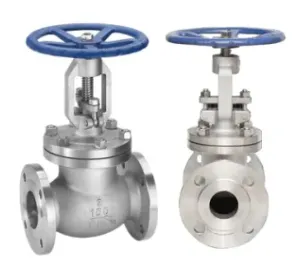
As a bellows gate valve supplier, we offer a wide range of products suitable for handling fluids with high particle content. Our ANSI Gate Valve ANSI is designed to meet the industry standards and provides reliable performance in various applications. It is available in different materials and sizes to accommodate different flow and pressure requirements.
Our Cast Iron Brass Sealed Rising Stem Gate Valves are another option for applications where cost - effectiveness and durability are important. These valves are suitable for handling high - particle fluids in less demanding environments.
For more specialized applications, our F4 Gate Valve F4 offers enhanced performance. It is designed with advanced materials and features to withstand the harsh conditions of high - particle fluid handling.
Installation and Maintenance
Proper installation and maintenance are key to ensuring the long - term performance of the bellows gate valve. During installation, make sure that the valve is correctly aligned with the pipeline and that all connections are tightened properly. Follow the manufacturer's instructions for installation to avoid any potential issues.
Regular maintenance is also essential. Inspect the valve periodically for signs of wear, leakage, or particle accumulation. Clean the valve components as needed to remove any trapped particles. Replace any worn - out parts promptly to prevent further damage to the valve.
Conclusion
Selecting the right bellows gate valve for fluids with high particle content requires careful consideration of material selection, valve design, flow rate, and pressure requirements. As a bellows gate valve supplier, we are committed to providing high - quality products and expert advice to help you make the best choice for your application.
If you are in need of a bellows gate valve for your high - particle fluid handling system, we invite you to contact us for a detailed discussion. Our team of experts will work with you to understand your specific requirements and recommend the most suitable valve solution. Let us help you ensure the reliable and efficient operation of your system.
References
- Valve Handbook, Third Edition by Robert W. Darby
- Industrial Valves: A Practical Guide by Andrew W. Teale