Hey there! As a supplier of ANSI Gate Valves, I often get asked, "Does ANSI Gate Valve have good sealing performance?" Well, let's dive right into this topic and explore what makes these valves tick when it comes to sealing.
First off, let's understand what ANSI Gate Valves are all about. ANSI, which stands for the American National Standards Institute, sets the standards for these valves. These standards ensure that the valves are designed, manufactured, and tested to meet certain quality and performance criteria. ANSI Gate Valves are widely used in various industries, from oil and gas to water treatment, because they are durable and reliable.


Now, let's talk about the sealing performance. The sealing of a gate valve is crucial as it prevents leaks, which can be a major hazard in many industrial settings. ANSI Gate Valves are designed with a gate that moves up and down to control the flow of fluid. When the gate is fully closed, it forms a seal against the valve seats. The quality of this seal depends on several factors.
One of the key factors is the material used for the valve seats and the gate. High - quality materials like stainless steel, brass, or bronze are commonly used. These materials are resistant to corrosion and wear, which helps to maintain a tight seal over time. For example, in a corrosive environment like a chemical plant, a stainless - steel ANSI Gate Valve would be a great choice as it can withstand the harsh chemicals without degrading the seal.
Another important aspect is the design of the valve. ANSI standards specify certain design features that contribute to good sealing performance. The seats are machined to a very precise tolerance, which ensures a proper fit between the gate and the seats. This precision machining reduces the chances of leakage. Also, the valve body is designed to provide sufficient support to the gate and seats, preventing any deformation that could compromise the seal.
Let's take a look at some of the different types of ANSI Gate Valves available, each with its own unique sealing characteristics.
Bellows Gate Valve: These valves have a bellows component that provides an additional layer of sealing. The bellows act as a barrier between the valve stem and the fluid, preventing any leakage along the stem. This is particularly useful in applications where a zero - leakage system is required, such as in high - pressure or toxic fluid applications.
Non - rising Stem Gate Valve: In this type of valve, the stem does not rise as the valve is opened or closed. This design has its own advantages in terms of sealing. Since the stem is not exposed to the fluid as much as in a rising stem valve, there is less chance of stem - related leakage. It also makes the valve more suitable for applications where space is limited.
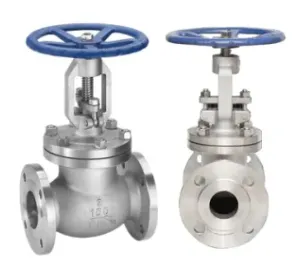
American Standard Flanged Gate Valves: These valves use flanges to connect to the pipeline. The flanged connection provides a strong and reliable seal. The flanges are bolted together, and a gasket is placed between them to prevent leakage. The ANSI standards for flanges ensure that the connection is tight and secure.
However, it's not all smooth sailing. There are some factors that can affect the sealing performance of ANSI Gate Valves. One of them is the operating conditions. If the valve is subjected to high temperatures, high pressures, or abrasive fluids, it can put more stress on the seal. Over time, this can lead to wear and tear of the valve seats and gate, resulting in leakage. For example, in a steam application, the high temperature can cause the materials to expand and contract, which may eventually loosen the seal.
Another factor is improper installation. If the valve is not installed correctly, it can cause misalignment between the gate and the seats, leading to poor sealing. This includes not tightening the bolts properly in a flanged valve or not aligning the valve with the pipeline correctly.
So, how can we ensure that the ANSI Gate Valve maintains good sealing performance? Regular maintenance is key. This includes inspecting the valve for any signs of wear, cleaning the valve seats and gate, and replacing any worn - out parts. Lubricating the valve stem can also help to ensure smooth operation and maintain a good seal.
In conclusion, ANSI Gate Valves generally have good sealing performance when they are made to the ANSI standards, using high - quality materials, and designed with precision. The different types of ANSI Gate Valves offer various sealing solutions to meet different application requirements. However, it's important to take into account the operating conditions and perform regular maintenance to ensure long - term sealing effectiveness.
If you're in the market for ANSI Gate Valves and want to discuss your specific requirements, we'd love to have a chat. Whether you need a valve for a new project or to replace an existing one, we can help you find the right solution. Just reach out and let's start the conversation about how our ANSI Gate Valves can meet your needs.
References:
- ANSI/ASME B16.34 - Valves - Flanged, Threaded, and Welding End
- Valve Manufacturers Association (VMA) Technical Papers