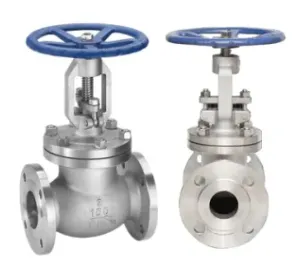
Gate valves are essential components in various industrial piping systems, playing a crucial role in controlling the flow of liquids and gases. Among the different types of gate valves, parallel gate valves stand out due to their unique design and operational characteristics. As a parallel gate valve supplier, I am well - versed in the differences between parallel gate valves and other types of gate valves, and I am eager to share this knowledge with you.
1. Structural Design
Parallel Gate Valves
Parallel gate valves feature two parallel discs that move perpendicular to the flow direction. These discs are typically spring - loaded or use a floating design to ensure a tight seal against the valve seats. The parallel orientation of the discs allows for a more uniform distribution of pressure across the sealing surfaces. This design is particularly effective in applications where the valve needs to be fully open or fully closed, as it provides a large flow area with minimal resistance when open.
Wedge Gate Valves
Wedge gate valves, on the other hand, use a single or double - disc wedge - shaped design. The wedge is forced between the valve seats as the valve is closed, creating a tight seal. This design can be further classified into solid wedge, flexible wedge, and split wedge types. Solid wedge gate valves are simple and robust, suitable for general - purpose applications. Flexible wedge gate valves can compensate for thermal expansion and contraction, making them ideal for high - temperature applications. Split wedge gate valves are designed to reduce the seating force required, which can be beneficial in large - diameter valves. For example, the Ductile Cast Iron DN50 - 200 Groove Type Rising Stem Wedge Gate Valve For Fire Fighting is a typical wedge gate valve used in fire - fighting systems, where its reliable sealing performance is crucial.
Knife Gate Valves
Knife gate valves have a sharp - edged gate that cuts through the media, which is often used in applications involving slurries, viscous fluids, or solids. The gate is usually flat and moves vertically to open or close the valve. This design allows the valve to handle materials that might clog other types of gate valves. The Knife Gate Valve is specifically engineered for such challenging applications, where its ability to cut through thick media is a significant advantage.
2. Sealing Mechanism
Parallel Gate Valves
The sealing mechanism of parallel gate valves relies on the spring - loaded or floating discs. When the valve is closed, the discs are pressed against the seats by the spring force or the pressure of the media. This provides a reliable seal, especially in applications with low - to - medium pressure. However, in high - pressure applications, the sealing performance may be affected if the design is not optimized.
Wedge Gate Valves
Wedge gate valves achieve sealing by the wedging action of the disc(s) against the seats. The force exerted by the wedge can create a very tight seal, even under high pressure. However, this wedging action can also cause problems. For instance, in applications with thermal cycling, the expansion and contraction of the valve components can lead to seat damage or binding of the wedge, resulting in leakage or difficulty in operation.
Knife Gate Valves
Knife gate valves seal by the gate pressing against a soft or elastomeric seat. The sharp edge of the gate helps to clean the seat as it closes, which is beneficial in preventing the build - up of debris. However, the soft seat may wear out over time, especially in abrasive media applications, requiring regular replacement.
3. Flow Characteristics
Parallel Gate Valves
Parallel gate valves offer excellent flow characteristics when fully open. The parallel discs create a straight - through flow path with minimal obstruction, resulting in low pressure drop. This makes them suitable for applications where high - flow rates are required, such as in large - diameter water supply systems or industrial pipelines for transporting gases.
Wedge Gate Valves
Wedge gate valves also provide a relatively straight - through flow path when open. However, the wedge - shaped design may cause some minor turbulence, especially in the transition area between the open and closed positions. In some cases, this turbulence can lead to increased pressure drop compared to parallel gate valves.
Knife Gate Valves
Knife gate valves are designed primarily for on - off service rather than flow control. When open, the gate is retracted into a pocket, allowing the media to flow through. However, the flow path may not be as smooth as that of parallel or wedge gate valves, and there may be some restrictions due to the gate's design and the presence of the seat.
4. Operational Performance
Parallel Gate Valves
Parallel gate valves are relatively easy to operate. The parallel movement of the discs requires less torque compared to the wedging action of wedge gate valves. This makes them suitable for applications where frequent operation is required. Additionally, the uniform pressure distribution on the sealing surfaces reduces the risk of seat damage during operation.
Wedge Gate Valves
Wedge gate valves may require more force to operate, especially when closing against high pressure. The wedging action can cause the valve to bind if not properly maintained, leading to increased operating torque and potential damage to the valve components. In some cases, the valve may need to be pre - loaded or adjusted to ensure proper sealing.
Knife Gate Valves
Knife gate valves are designed for simple on - off operation. They are typically used in applications where the valve is either fully open or fully closed. The sharp - edged gate can cut through the media, but this also means that the gate may wear out over time, especially in abrasive applications. Regular inspection and maintenance are required to ensure proper operation.
5. Application Areas
Parallel Gate Valves
Parallel gate valves are commonly used in applications where low - pressure drop, frequent operation, and reliable sealing are required. They are widely used in water treatment plants, oil and gas pipelines, and industrial process systems. For example, in a water distribution network, parallel gate valves can be used to control the flow of water between different sections of the pipeline, ensuring efficient water supply.


Wedge Gate Valves
Wedge gate valves are suitable for a wide range of applications, including high - pressure and high - temperature systems. They are often used in power plants, refineries, and chemical processing industries. The Cast Iron Brass Sealed Rising Stem Gate Valves are a good example of wedge gate valves used in industrial applications, where their ability to withstand high pressures and temperatures is essential.
Knife Gate Valves
Knife gate valves are mainly used in applications involving slurries, viscous fluids, and solids. They are commonly found in mining, pulp and paper, and wastewater treatment industries. In a mining operation, knife gate valves can be used to control the flow of ore slurries, where their ability to cut through the thick media is crucial.
Conclusion
In summary, parallel gate valves differ from other types of gate valves in terms of structural design, sealing mechanism, flow characteristics, operational performance, and application areas. As a parallel gate valve supplier, I understand the unique advantages of parallel gate valves and can provide high - quality products to meet the specific needs of different industries. If you are in the market for gate valves and are considering the best option for your application, I encourage you to contact me for a detailed discussion. We can work together to determine the most suitable valve type and configuration for your project, ensuring optimal performance and reliability.
References
- Valve Handbook, 4th Edition, by J. S. Clark
- Industrial Valves: Selection, Specification, and Application, by A. W. Leishear