Hey there! As a proud supplier of Rising Stem Gate Valves, I've seen firsthand how the stem movement plays a crucial role in the operation of these valves. In this blog, I'll dig deep into how the stem movement affects the performance of a Rising Stem Gate Valve, and I'll also share some insights about our awesome valve products.
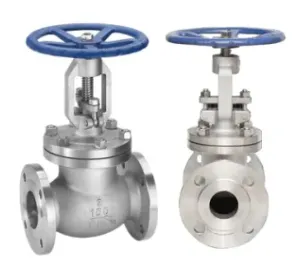
Let's start with the basics. A Rising Stem Gate Valve is a type of valve used to control the flow of fluids in a pipeline. The distinct feature of this valve is its stem, which rises and lowers as the valve is opened or closed. This movement is what makes the valve work, and it has a significant impact on its operation.


When you turn the handwheel of a Rising Stem Gate Valve, you're actually causing the stem to rotate. This rotational motion of the stem is then converted into linear motion, either lifting or lowering the gate inside the valve body. As the gate moves up, it allows fluid to flow through the valve's opening. Conversely, when the gate moves down, it blocks the flow of fluid.
One of the key advantages of the rising stem design is that it provides a clear visual indication of the valve's position. You can easily tell whether the valve is open or closed just by looking at the position of the stem. If the stem is protruding out of the valve body, the valve is open. If it's retracted, the valve is closed. This visual feedback is especially useful in situations where quick and accurate valve status checks are required.
Now, let's talk about how the stem movement affects the sealing performance of the valve. When the valve is fully closed, the stem moves the gate downward until it seats firmly against the valve seats. This creates a tight seal that prevents fluid from leaking past the valve. The quality of this seal depends on several factors, including the smoothness of the stem movement, the precision of the gate's alignment, and the material properties of the valve seats.
A smooth and consistent stem movement is essential for achieving a good seal. If the stem jams or moves unevenly, it can cause the gate to be misaligned, resulting in a leaky valve. That's why we pay close attention to the manufacturing process of our valves to ensure that the stems move smoothly and precisely.
Another important aspect of the stem movement is its impact on the valve's flow characteristics. When the valve is open, the stem lifts the gate, allowing fluid to flow freely through the valve. The amount of flow that can pass through the valve depends on the size of the valve opening, which is determined by the position of the gate. The stem movement controls how far the gate is lifted, thus regulating the flow rate.
In a Rising Stem Gate Valve, the flow rate typically increases linearly with the stem's upward movement. However, it's important to note that as the valve approaches full open, the increase in flow rate may start to level off. This is because the valve reaches a point where the flow is no longer restricted by the valve opening but rather by the piping system's overall resistance.
Now, I'd like to introduce some of our great Rising Stem Gate Valve products. Check out our 16bar Dustile Iron Nrs Resilient Seat Wedge Gate Valve. This valve is made of high - quality ductile iron and features a resilient seat design, which provides excellent sealing performance and durability. It's suitable for a wide range of applications, including water supply systems, wastewater treatment plants, and industrial pipelines.
We also have the Ductile Cast Iron DN50 - 200 Groove Type Rising Stem Wedge Gate Valve For Fire Fighting. This valve is specifically designed for fire - fighting systems. Its groove type design makes it easy to install and connect to the pipeline. The rising stem provides a clear indication of the valve's status, which is crucial in fire - fighting operations.
And for those who need a more specialized valve, take a look at our Manual Lug Type Knife Gate Valve. This valve is ideal for applications where the fluid contains solid particles or where a tight shut - off is required. The lug type design allows for easy installation between flanges, and the manual operation provides reliable control.
In conclusion, the stem movement of a Rising Stem Gate Valve is a critical factor that affects its operation in many ways. From providing a visual indication of the valve's position to controlling the sealing performance and flow characteristics, the stem movement plays a vital role in ensuring the valve works efficiently and effectively.
If you're in the market for high - quality Rising Stem Gate Valves, we're here to help. Our valves are designed and manufactured to meet the highest standards of quality and performance. Whether you need a valve for a small - scale project or a large - scale industrial application, we have the right solution for you. Don't hesitate to contact us to discuss your requirements and get a quote. We're looking forward to working with you!
References
- Valve Handbook: Principles and Applications, various industry - standard valve textbooks
- Technical literature from valve manufacturers and industry associations related to Rising Stem Gate Valves