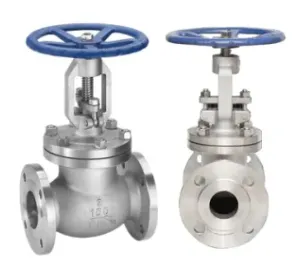
Hey there! As a supplier of Parallel Gate Valves, I often get asked about how to calculate the torque for these valves. It's a crucial aspect, especially when it comes to ensuring the proper functioning and longevity of the valve. So, let's dive right into it!
Understanding the Basics of Torque in Parallel Gate Valves
First things first, what exactly is torque? In simple terms, torque is the force that causes an object to rotate around an axis. When it comes to parallel gate valves, torque is the force required to open or close the valve. It's influenced by several factors, such as the size of the valve, the pressure of the fluid flowing through it, and the type of sealing materials used.

Let's break down these factors a bit more. The size of the valve plays a significant role. Larger valves generally require more torque to operate because there's more surface area to move. For example, a 12 - inch parallel gate valve will need more force to open or close compared to a 4 - inch one.
The pressure of the fluid is another critical factor. Higher fluid pressures mean more force is exerted on the valve gate. So, if you're dealing with a high - pressure system, you'll need to calculate a higher torque value to ensure the valve can be operated smoothly.
The type of sealing materials also affects the torque. Some materials have higher friction coefficients, which means more torque is needed to overcome the friction when opening or closing the valve. For instance, a valve with a rubber seal might require less torque compared to one with a metal - to - metal seal.
The Mathematical Approach to Torque Calculation
Now, let's get into the nitty - gritty of calculating the torque. There are a few formulas and methods that can be used, but one of the most common approaches is based on the seat friction and stem friction.
The total torque (T) required to operate a parallel gate valve can be calculated as the sum of the seat friction torque (Ts) and the stem friction torque (Ts).
The seat friction torque (Ts) can be estimated using the formula:
Ts = μs * Fs * Ds / 2
Where:
- μs is the coefficient of friction between the seat and the gate. This value depends on the materials of the seat and the gate. For example, if the seat is made of stainless steel and the gate is also stainless steel, the coefficient of friction might be around 0.15 - 0.2.
- Fs is the seat load. This is the force exerted on the seat due to the fluid pressure. It can be calculated as Fs = P * As, where P is the fluid pressure and As is the seat area.
- Ds is the seat diameter.
The stem friction torque (Ts) is calculated using the formula:
Ts = μst * Fst * Dst / 2
Where:
- μst is the coefficient of friction between the stem and the packing. The value varies depending on the type of packing material. For a graphite packing, the coefficient of friction might be around 0.1 - 0.15.
- Fst is the stem load. This is the force exerted on the stem due to the fluid pressure and the mechanical forces in the valve.
- Dst is the stem diameter.
Let's say we have a parallel gate valve with the following specifications:
- Seat diameter (Ds) = 8 inches
- Stem diameter (Dst) = 1.5 inches
- Fluid pressure (P) = 100 psi
- Coefficient of seat friction (μs) = 0.18
- Coefficient of stem friction (μst) = 0.12
First, we need to calculate the seat area (As). The formula for the area of a circle is A = π * (D/2)^2. So, As = π * (8/2)^2 = 50.27 square inches.
The seat load (Fs) = P * As = 100 * 50.27 = 5027 lbs.
The seat friction torque (Ts) = μs * Fs * Ds / 2 = 0.18 * 5027 * 8 / 2 = 3620.64 in - lbs.
Now, let's assume the stem load (Fst) is 500 lbs.
The stem friction torque (Ts) = μst * Fst * Dst / 2 = 0.12 * 500 * 1.5 / 2 = 45 in - lbs.
The total torque (T) = Ts+ Ts = 3620.64 + 45 = 3665.64 in - lbs.
Real - World Considerations
In the real world, calculating torque isn't always as straightforward as using these formulas. There are other factors that can come into play. For example, the condition of the valve, such as whether it's new or has been in service for a long time, can affect the friction coefficients. A valve that's been exposed to corrosive fluids might have higher friction due to wear and tear.
Also, the operating environment matters. If the valve is installed in a cold environment, the properties of the sealing materials might change, which can impact the torque requirements.
Other Types of Gate Valves
If you're interested in gate valves, you might also want to check out some other types. We offer a range of Knife Gate Valve which are great for applications involving slurries and viscous fluids. These valves have a sharp - edged gate that can cut through the material, making them ideal for industries like mining and wastewater treatment.

We also have American Standard Flanged Gate Valves. These valves are designed according to American standards, ensuring high - quality and compatibility with other components in your system. They're commonly used in various industrial applications where a reliable and durable gate valve is needed.
Another option is our Non Rising Stem Groove Resilient Gate Valve. This type of valve is perfect for applications where space is limited. The non - rising stem design means that the stem doesn't extend out of the valve when it's opened, making it suitable for installations with low headroom.
Why Choose Our Parallel Gate Valves
As a supplier, we take pride in offering high - quality parallel gate valves. Our valves are made from top - notch materials, ensuring durability and long - term performance. We also have a team of experts who can help you with torque calculations and other technical aspects. Whether you're working on a small - scale project or a large industrial installation, we can provide the right valve for your needs.
Conclusion
Calculating the torque for a parallel gate valve is an important step in ensuring its proper operation. By understanding the factors that influence torque and using the appropriate formulas, you can make sure that your valve can be opened and closed smoothly. If you have any questions about torque calculation or are interested in purchasing our parallel gate valves, don't hesitate to reach out. We're here to help you make the right choice for your project.
References
- Valve Handbook by Thorkild Nielsen
- Industrial Valves: Selection and Sizing by Robert D. Conrado