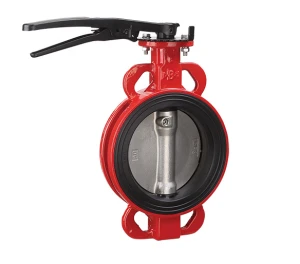
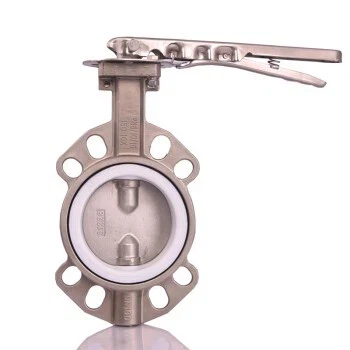
At its core, a butterfly valve operates via a quarter-turn mechanism (a 90-degree rotation) to start, stop, or regulate the flow of fluids within a pipeline. Attached to an internal stem, a circular disc acts as the "butterfly." When the actuator or handle turns the stem 90 degrees, the disc rotates parallel to the media flow, allowing unimpeded passage. Conversely, turning the disc back to a position perpendicular to the pipe completely blocks the flow, providing a reliable on-off seal. Furthermore, partial rotation enables precise proportional throttling and flow control.
Due to their straightforward yet efficient design, butterfly valves have become a cornerstone in industrial fluid control systems. Comprising just a few primary components-including the body, disc, stem, and seat-these valves are widely favored for their lightweight structure, compact installation footprint, and cost-effectiveness in larger pipe diameters.
Whether you are designing a new industrial fluid system or selecting components for maintenance, understanding the working principles, structural variations, and connection types (such as wafer and lug designs) is essential. In this comprehensive guide, we will break down the mechanics of butterfly valves, explore their core parts, examine the differences between concentric and eccentric designs, and help you choose the right valve configuration for your applications.
What is a Butterfly Valve?
A butterfly valve is a quarter-turn rotational motion valve that is widely used in industrial piping systems to isolate or regulate fluid flow. Its name originates from its internal structure: a metal disc (or plate) positioned in the center of the pipe, which is connected to an external operator (such as a handle, gear box, or pneumatic/electric actuator) via a steel stem. As the disc turns, it resembles the flapping wings of a butterfly-hence the name.
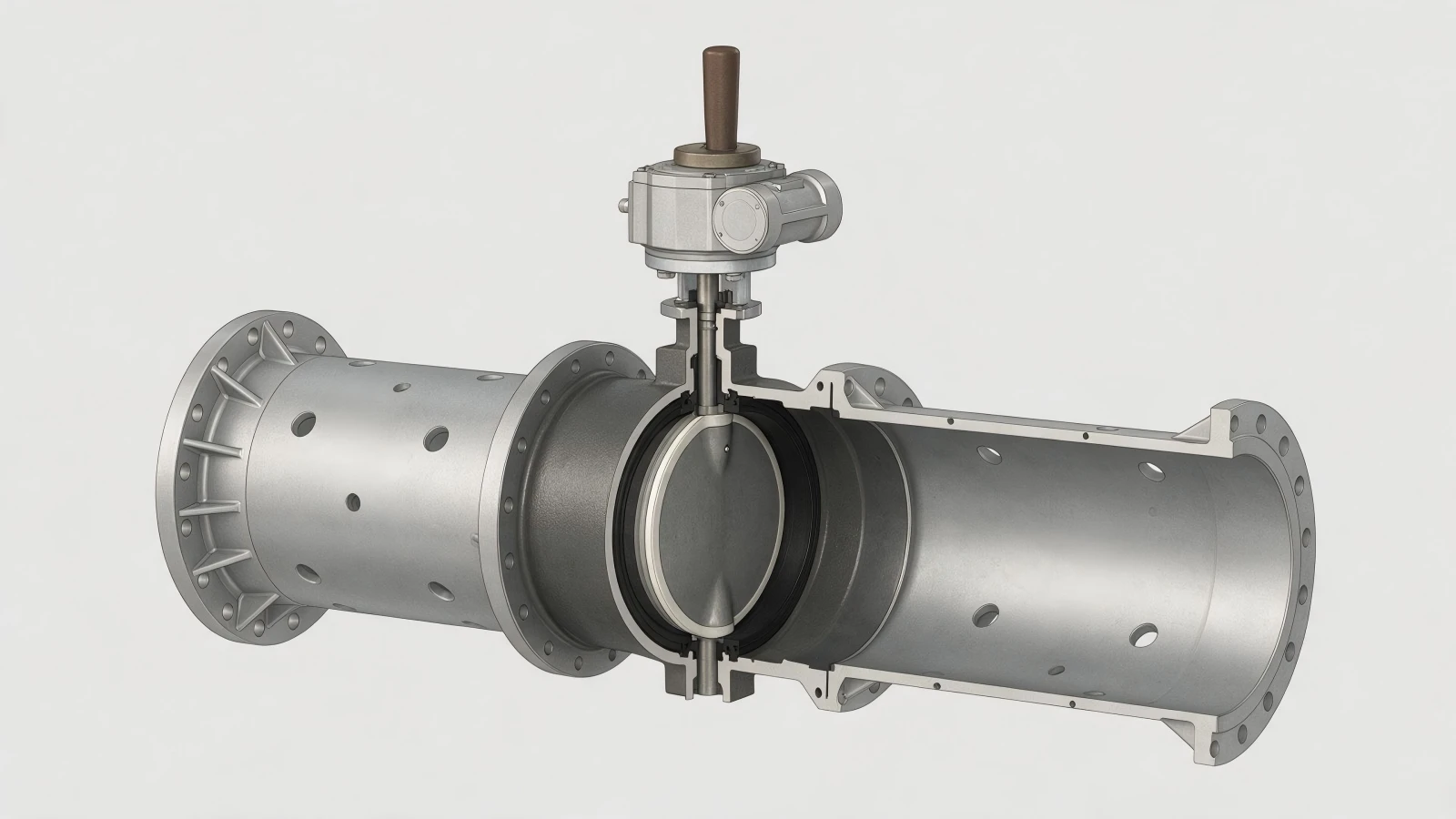
Compared to traditional gate or globe valves, butterfly valves offer a distinct set of engineering and economic advantages, making them a preferred choice for large-scale industrial projects:
Lightweight and Compact Design: Butterfly valves take up significantly less space (face-to-face dimensions) and are much lighter than gate or ball valves, reducing structural support requirements on pipelines.
Cost-Effectiveness for Large Diameters: They maintain a lower manufacturing and purchasing cost advantage, especially in large pipe diameters (e.g., DN50 to DN1200+).
Fast Operation: Requiring only a 90-degree quarter-turn from full open to full closed, they allow for rapid opening and closing.
Low Pressure Drop: The streamlined disc design in the open position creates minimal flow resistance and a lower pressure drop across the valve.
| Valve Type | Operation Method | Space & Weight | Cost for Large Diameters | Best Suited For |
| Butterfly Valve | Quarter-turn (90°) | Compact, Lightweight | Low / Cost-effective | Large pipelines, quick on-off, and throttling |
| Gate Valve | Multi-turn (Rising/Non-rising stem) | Heavy, Takes up more space | High | Full isolation with minimal pressure drop (on-off only) |
| Ball Valve | Quarter-turn (90°) | Bulkier in large sizes | High in large sizes | Leak-tight shutoff, high-pressure systems |
What is the working principle of a butterfly valve?
The design and operation of a butterfly valve are remarkably straightforward yet highly efficient. Understanding how a butterfly valve works involves looking at its internal mechanics, flow control capabilities, and sealing dynamics.
The 90-Degree Quarter-Turn Mechanism
At the heart of the butterfly valve's operation is a simple quarter-turn mechanism (a 90-degree rotation). As shown in standard industrial configurations, the valve consists of four primary components: the body, seat, disc, and stem.
Open Position: When the actuator, handwheel, or handle turns the stem 90 degrees, the internal disc rotates to become parallel to the pipeline's media flow. This alignment creates a wide, unobstructed channel, allowing liquids, gases, or slurries to pass through with minimal resistance.
Closed Position: When the stem rotates the disc back so that it sits completely perpendicular to the flow direction, the edge of the disc presses tightly against the resilient valve seat, creating a secure, leak-tight seal that blocks the media entirely.
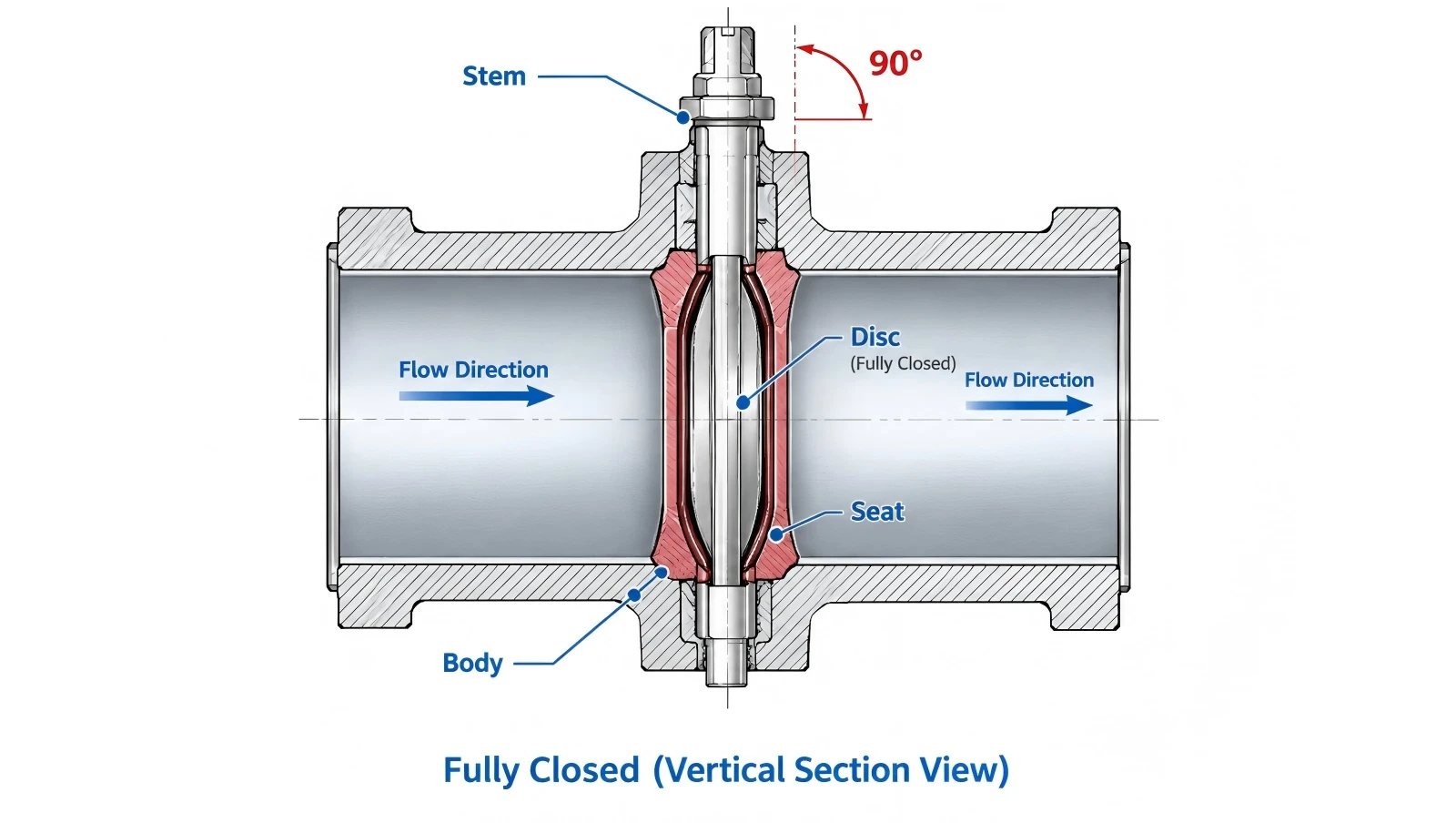
Throttling and Proportional Flow Control
Unlike traditional gate valves-which are strictly designed for full open or full closed ("on-off") services-butterfly valves excel in modulating services. By stopping the disc at any angle between 0 degrees (fully closed) and 90 degrees (fully open), operators can achieve precise, proportional flow control and fluid throttling. However, keep in mind that throttling at low angles can cause high flow turbulence and accelerated wear on the valve seat.
Sealing and Stem Leakage Prevention
As the disc approaches the final degrees of closure, it creates frictional contact with the inner seat. To prevent media from leaking externally along the operating shaft, the stem packing is equipped with specialized O-rings or dynamic seals, ensuring absolute containment under operational pressure.
| Valve Disc Position | Rotation Angle | Flow Status | Primary Application |
| Fully Open | 90° | Maximum flow, minimum pressure drop | Media transfer, full pipeline flow |
| Partially Open | 15° – 75° | Proportional throttling and flow regulation | Flow rate control, mixing processes |
| Fully Closed | 0° | Zero flow (Leak-tight shutoff) | Pipeline isolation, emergency shut-off |
What are the key parts of a butterfly valve?
Understanding the anatomy of a butterfly valve is essential for proper selection, maintenance, and troubleshooting in industrial piping systems. While designs can vary depending on pressure ratings and applications, a standard butterfly valve consists of four primary components, alongside actuation and sealing elements:
Valve Body: The outer shell that houses the internal components and connects directly to the pipeline flanges. Depending on the installation requirement, bodies are manufactured in wafer, lug, or flanged styles.
Disc (Valve Plate): The circular plate positioned in the center of the flow path. It acts as the primary barrier to control or block the media. When opened, it aligns with the flow; when closed, it blocks it.
Stem (Shaft): The metal rod that links the external operating handle or actuator to the internal disc, transferring the rotational torque required to open or close the valve.
Valve Seat: The inner lining (often made of resilient rubber, PTFE, or metal) fitted inside the valve body periphery. When the valve is closed, the disc presses tightly against this seat to ensure a leak-tight seal.
Actuator or Handle: The external control device used to operate the valve. Options range from simple manual levers and gearboxes for small sizes to automated pneumatic actuators or electric actuators for large-scale industrial control.
Stem Packing & O-rings: Internal seals placed around the stem to prevent media from leaking externally along the operating shaft.
| Component Name | Primary Function | Common Materials |
| Valve Body | Houses internal parts and connects to pipeline | Ductile Iron, Cast Steel, Stainless Steel (CF8/CF8M) |
| Disc | Controls, regulates, or blocks fluid flow | Stainless Steel, Aluminum Bronze, Ductile Iron (Nylon coated) |
| Stem | Transfers torque from operator to the disc | Stainless Steel (SS410, SS316) |
| Valve Seat | Provides a tight seal against the disc edge | EPDM, PTFE, Viton, NBR, Metal-to-Metal |
| O-Ring / Packing | Prevents media leakage along the operating stem | EPDM, NBR, Viton |
What are the types of butterfly valves?
Different industrial applications and pressure ranges require specific butterfly valve designs. To ensure optimal performance and longevity, butterfly valves are generally categorized based on two main criteria: Disc Closure Design (offset structure) and Connection Design (how they attach to the pipeline).
A. Classification by Disc Closure Design (Offset & Sealing)
Depending on the position of the stem relative to the disc's centerline and the sealing surface angle, butterfly valves are divided into:
Concentric (Zero Offset) Butterfly Valves: This is the most basic design, where the stem runs straight through the midline of the disc, and the seat is the inner diameter of the valve body. Because sealing relies on the flexibility of a resilient rubber seat (referred to as resilient-seated), the disc makes full contact with the seat for about 85° of a 90° rotation. These are ideal for low-pressure ranges and general utility services.
Eccentric Butterfly Valves: To reduce seat wear and friction, eccentric designs offset the stem from the disc's centerline or seat angle:
- Single Offset: The stem is positioned behind the disc centerline, reducing contact friction before full closure.
- Double Offset (High-Performance): The stem features both a centerline and a side offset. Only the final 1 to 3 degrees of closure make contact with the seat, drastically reducing wear and allowing the valve to handle higher pressures.
- Triple Offset: Features three offsets, often incorporating metal-to-metal seating for extreme temperature and high-pressure industrial applications.
B. Classification by Connection Design
How a butterfly valve connects to a piping system determines its installation flexibility and pressure capabilities:
Wafer Type Butterfly Valve: The most cost-effective version, sandwiched between two pipe flanges and secured with long bolts spanning the entire body. It is ideal for bi-directional differential pressure sealing and universal flow systems.
Lug Type Butterfly Valve: Features threaded inserts (lugs) on the exterior of the valve body. Pipe flanges attach to each side with independent bolts, allowing one side of the pipeline to be disconnected (dead-end service) without affecting the other side.
Flanged Type Butterfly Valve: Features integrated flanges at both ends that bolt directly to the pipe flanges, commonly used in large-diameter, heavy-duty industrial piping networks.
| Connection Type | Installation Method | Dead-End Service Support? | Best Suited Applications |
| Wafer Type | Sandwiched between two flanges using long bolts | No | Cost-sensitive projects, general water treatment, bi-directional flow |
| Lug Type | Secured with bolts on threaded lugs on both sides | Yes | Industrial systems requiring single-side pipeline maintenance |
| Flanged Type | Bolted directly to pipe flanges via integrated ports | Yes | Large pipe diameters, high-pressure industrial networks |
What are the common industrial applications?
Due to their versatility, efficiency, and cost-effectiveness in large diameters, butterfly valves are widely utilized across a broad spectrum of industries. They are engineered to handle various media, including water, air, steam, gases, and corrosive chemicals.
Key industrial applications include:
Water Treatment & Wastewater Management: Widely used in municipal water supply networks, desalination plants, and sewage treatment facilities for flow isolation and regulation.
Heating, Ventilation, and Air Conditioning (HVAC): Deployed in large commercial and industrial HVAC systems to control chilled water, condenser water, and airflow within duct and piping networks.
Chemical & Petrochemical Processing: High-performance and resilient-seated butterfly valves handle general chemical solutions, cooling water systems, and secondary process lines.
Power Generation: Utilized in cooling water systems, fuel handling lines, and auxiliary utility systems within thermal, nuclear, and hydroelectric power plants.
Marine & Shipbuilding: Chosen for seawater intake, ballast water management, and onboard utility lines due to their lightweight design and space-saving footprint.
Pneumatic and Automated Fluid Systems: Integrated frequently with pneumatic actuators or electric drives to support automated industrial production lines and remote processing hubs.
| Industry Sector | Typical Media Handled | Recommended Valve Type & Seat | Key Operational Benefit |
| Water Treatment | Raw water, wastewater, sewage | Wafer / Lug Type (EPDM/NBR seat) | Cost-effective, bi-directional sealing |
| HVAC Systems | Chilled water, hot water, air | Concentric Wafer Type | Low pressure drop, space-saving |
| Chemical Processing | Corrosive fluids, acids, solvents | Lug / Flanged Type (PTFE/Viton seat) | Superior chemical resistance |
| Power Generation | Cooling water, steam utilities | Double Offset / High-Performance | Handles higher pressure and temperature |
| Marine Industry | Seawater, ballast water | Aluminum Bronze Disc / EPDM Seat | Anti-corrosion, lightweight construction |
Reliable Fluid Control for a Municipal Water Project
To see these principles in practice, consider a recent deployment by a major municipal water treatment plant in Southeast Asia. The facility required an efficient, corrosion-resistant solution to manage raw water intake and downstream distribution lines under tight space constraints.
The Challenge: The plant needed to control bi-directional water flow across large-diameter pipes (DN300 to DN600) while ensuring zero leakage during peak operational hours and minimizing overall capital expenditure.
Our Solution: We supplied a batch of Lug Type Butterfly Valves featuring Ductile Iron bodies, anti-corrosive stainless steel discs, and high-grade EPDM resilient seats, coupled with heavy-duty pneumatic actuators for automated remote control.
The Result: The client successfully achieved rapid, leak-tight shut-off with minimal pressure drop. The compact wafer/lug design significantly reduced installation time and structural pipe loads, resulting in over 20% cost savings compared to traditional gate valves and ensuring stable, maintenance-free operation for over two years.

Looking for a custom valve solution for your project? Contact our engineering team today for a quick quote.