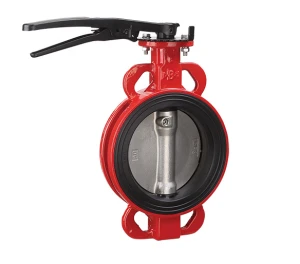
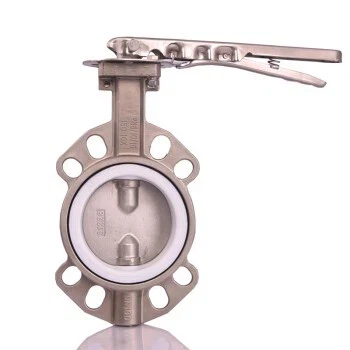
what is a butterfly valve used for, exactly?At its core, a butterfly valve is primarily utilized to provide reliable isolation (shut-off) or precise flow regulation (throttling) for a wide range of media, including liquids, gases, and slurries, across diverse pipeline systems.
Whether you are tasked with managing heavy-duty transport fluid systems or optimizing municipal water infrastructure, understanding the functional versatility of this valve type is essential for successful project execution. In this article, we will delve into the fundamental working principles of these valves, explore their critical applications in major industrial sectors, and analyze the distinct benefits of choosing specific wafer-style butterfly valves, lug-type butterfly valves, or automated industrial butterfly valves for your specific piping requirements. By the end of this guide, you will be better equipped to make an informed decision when selecting high-performance valve solutions for your upcoming engineering projects or bulk procurement needs.
How Does a Butterfly Valve Work?
To fully appreciate why a high-performance butterfly valve is the preferred choice for industrial flow management, it is essential to understand its internal anatomy and operating mechanism. Despite their high functionality, butterfly valves are engineered for simplicity, which directly translates to lower operational failure rates and reduced maintenance overhead.
1. The Anatomy of a Butterfly Valve
A standard industrial butterfly valve is composed of four primary components, each designed to ensure a tight seal and consistent flow control:
Valve Body: The outer casing that holds the entire assembly together and connects directly to the pipeline.
Disc (Butterfly): The circular plate positioned in the center of the flow path. This is the "gatekeeper" that controls the volume of fluid passing through.
Valve Stem: The rod that connects the disc to the external actuator or handle, transmitting the torque required to rotate the disc.
Valve Seat: The lining inside the body that ensures a bubble-tight shut-off when the disc is in the closed position. Depending on the media, these seats are often engineered from resilient EPDM, NBR, or chemical-resistant PTFE.
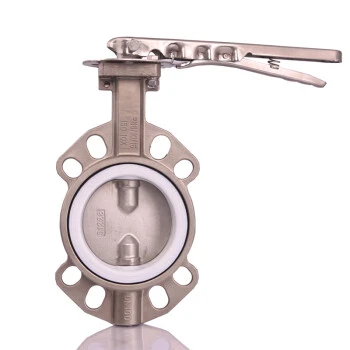

2. The Mechanics of Quarter-Turn Operation
The efficiency of a butterfly valve stems from its quarter-turn (90-degree) rotational design. Unlike gate or globe valves that require multiple rotations to fully open or close, a butterfly valve completes its entire cycle with a simple 90-degree movement:
Full Open: The disc is positioned parallel to the direction of the fluid flow, offering minimal obstruction and creating a low-pressure-drop flow path.
Full Closed: The disc is rotated perpendicular to the flow, sealing against the seat and effectively blocking the media.
This rapid-response mechanism is why these valves are highly valued in time-sensitive industrial process control. Because the disc is always centered in the flow path, the pressure of the fluid acts equally on both sides of the disc, making the operation significantly easier and requiring less torque-whether you are using a simple manual lever or an automated pneumatic butterfly valve actuator.
| Feature | Butterfly Valve | Gate Valve | Why B2B Buyers Choose Butterfly Valves |
| Operation Speed | Very Fast (90-degree quarter-turn rotation) | Slow (Requires multiple full rotations of the handwheel) | Saves time in emergency shutdowns and automated processes. |
| Space Requirement | Compact & Lightweight (Requires minimal pipeline space) | Bulky & Tall (Takes up significant vertical installation space) | Ideal for tight industrial spaces, containerized units, and crowded pipe racks. |
| Pressure Drop | Low pressure drop when fully open, though disc remains in flow path | Minimal pressure drop (unobstructed straight-through flow path when open) | Highly efficient for high-volume fluid transfer systems. |
| Installation & Weight | Lightweight (reduces pipe support structure costs) | Heavy (often requires additional structural supports) | Significantly lowers shipping and on-site installation labor costs. |
| Throttling Capability | Good (Suitable for flow regulation and throttling) | Poor (Designed strictly for on/off service; causes seat erosion if throttled) | Offers dual utility for both isolation and moderate flow control. |
| Cost-Effectiveness | High Cost-Performance (Especially economical in large diameters) | Higher cost (Particularly for large-scale industrial piping) | Maximizes ROI for bulk industrial and municipal procurement projects. |
For engineers comparing piping options, the table below highlights why butterfly valves are frequently preferred over traditional gate valves in modern industrial applications.
Core Industrial Applications: Where Are Butterfly Valves Used?
Because of their adaptability, rapid operation, and cost-efficiency in larger diameters, butterfly valves are deployed across a vast spectrum of industrial sectors. Below are the primary industries where these valves play a mission-critical role in fluid management:
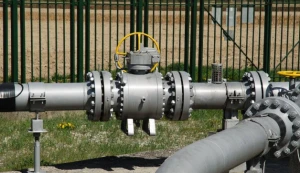
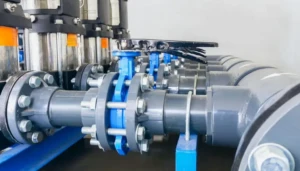
Water & Wastewater Treatment Plants
In municipal and industrial water treatment facilities, handling massive volumes of liquid efficiently is paramount.
Key Applications: Large-diameter raw water intake, municipal water distribution networks, desalination plants, and effluent treatment systems.
Why Butterfly Valves? Their ability to provide reliable shut-off and moderate flow regulation in large pipelines makes them the standard choice, drastically reducing infrastructure and equipment costs compared to bulky gate valves.
HVAC (Heating, Ventilation, and Air Conditioning) Systems
Commercial buildings, data centers, and large industrial plants rely heavily on centralized climate control loops.
Key Applications: Chilled water loops, condenser water lines, cooling tower systems, and large air-handling unit flow control.
Why Butterfly Valves? Their compact installation footprint allows them to fit easily into tight mechanical rooms and crowded pipe racks, while ensuring smooth chilled water flow regulation.
Oil & Gas and Chemical Processing
While extreme pressures and highly corrosive acids often demand specialized valves, butterfly valves are widely utilized under specific ratings.
Key Applications: Low-pressure utility lines, cooling water systems, bulk chemical storage transfer, and non-hazardous gas distribution.
Why Butterfly Valves? By pairing corrosion-resistant materials-such as PTFE/EPDM resilient seats and stainless steel or duplex discs-with heavy-duty body designs, these valves handle specific process media safely and economically.
Power Generation Facilities
Power plants (thermal, nuclear, and renewable biomass) require immense volumes of water and gas to operate continuously.
Key Applications: Condenser cooling water systems, auxiliary service water, and flue gas desulfurization (FGD) systems.
Why Butterfly Valves? They withstand high-flow rates and cyclical operations, ensuring uninterrupted utility support essential for continuous power generation.
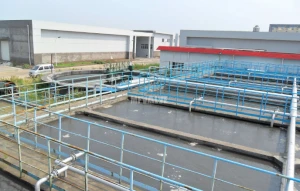
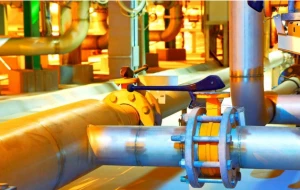
Marine & Shipbuilding Industry
Space on ships and offshore platforms is strictly limited, and weight reduction directly impacts fuel efficiency.
Key Applications: Ballast water management systems, sea chest isolation, and onboard bilge and fire-fighting water networks.
Why Butterfly Valves? Their lightweight, space-saving design combined with corrosion-resistant body coatings makes them an ideal fit for harsh marine environments.
Food, Beverage, and Pharmaceutical (Sanitary Applications)
Hygiene and contamination prevention are non-negotiable in processing consumable goods.
Key Applications: Clean-in-place (CIP) utility lines, juice, dairy, and beverage transfer pipelines.
Why Butterfly Valves? Specially engineered sanitary stainless steel butterfly valves with smooth, polished disc finishes and food-grade seats prevent bacteria buildup and allow for quick, thorough sterilization.
| Industry | Typical Media | Recommended Valve Type / Material | Core Benefit for Buyers |
|
Water & Wastewater |
Raw water, seawater, sewage, treated water | Wafer/Lug butterfly valve, Cast Iron/Ductile Iron body, EPDM seat | Cost-effective isolation for large-diameter municipal pipelines. |
|
HVAC Systems
|
Chilled water, condenser water, glycol solutions | Lug butterfly valve, Ductile Iron body, Aluminum Bronze disc | Compact footprint for tight mechanical rooms and pipe racks. |
|
Power Generation
|
Cooling water, circulating water, flue gas | High-performance offset butterfly valve, Stainless Steel | Withstands high-flow rates and continuous cyclical operation. |
|
Marine & Shipbuilding
|
Seawater, ballast water, bilge water | Lug/Flanged butterfly valve, Bronze or Nylon-coated body | Lightweight & corrosion-resistant for harsh marine environments. |
|
Food & Pharmaceutical |
Process water, beverages, CIP cleaning fluids | Sanitary butterfly valve, 316L Stainless Steel, Food-grade PTFE | Hygienic, smooth finish preventing bacteria buildup and contamination. |
Key Functions: When to Choose a Butterfly Valve?
To determine whether a butterfly valve is the right fit for your piping system, it is vital to evaluate its core functional capabilities. While different valves serve unique purposes, butterfly valves excel in three primary operational scenarios:
Isolation and Rapid On-Off Service
When a pipeline requires emergency shut-off or routine isolation, time is of the essence.
The Function: Thanks to its 90-degree quarter-turn mechanism, a butterfly valve cuts off media flow almost instantaneously compared to traditional multi-turn valves.
Best For: Systems requiring frequent operational cycles or rapid emergency shutdowns where minimal operator effort is critical.


Flow Throttling and Regulation
Unlike gate valves-which are strictly designed for fully open or fully closed positions and will suffer severe seat damage if used for regulation-butterfly valves are engineered to handle moderate flow control.
The Function: By securing the disc at specific degrees of opening (e.g., 30°, 45°, 60°), operators can effectively throttle the volume of liquid or gas passing through the network.
Best For: HVAC chilled water systems and industrial cooling loops that require dynamic flow regulation and pressure balancing.
Space-Constrained Installations
Modern industrial plants, skid-mounted equipment, and containerized units often suffer from severe spatial limitations.
The Function: Butterfly valves feature an ultra-short face-to-face dimension (especially wafer-type and lug-type designs), taking up a fraction of the pipeline space required by globe or gate valves.
Best For: Crowded pipe racks, marine engine rooms, and compact mechanical skid packages where every inch of space matters.
Advantages of Using Butterfly Valves in B2B Projects
For B2B procurement managers, project engineers, and plant operators, specifying butterfly valves offers distinct economic and operational advantages over alternative valve types:
Exceptional Cost-Effectiveness (High ROI): Especially in large diameters (DN50 to DN1200+), butterfly valves require significantly less raw material to manufacture, making them drastically more affordable than ball valves or gate valves of equivalent size. This maximizes budget efficiency for large-scale municipal and industrial projects.
Lightweight & Structural Efficiency: Their compact profile and lightweight body reduce the overall load on piping support structures, which in turn lowers on-site installation labor and structural engineering costs.
Low Maintenance Overhead: With fewer internal moving parts and a streamlined flow path, butterfly valves experience minimal mechanical wear. Resilient seats (like EPDM or PTFE) are also easily replaceable, translating to extended service life and reduced downtime.
High Actuation Versatility: Butterfly valves can be seamlessly integrated with manual hand levers, manual gearboxes, pneumatic actuators, or electric actuators, offering flexible automation options for smart industrial process control.