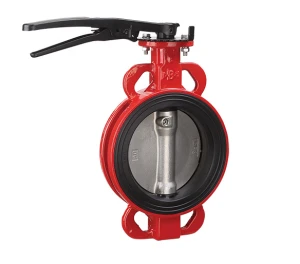
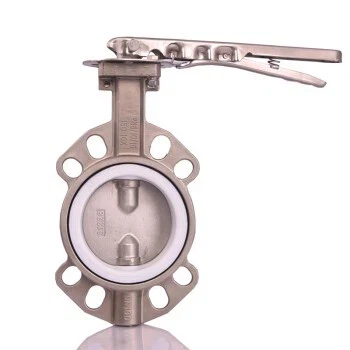
Choosing between a butterfly valve and a ball valve often comes down to balancing operational efficiency, budget, and system requirements. While ball valves are excellent for high-pressure, zero-leakage isolation in small-diameter lines, they become prohibitively heavy and expensive as pipe diameters increase.
In contrast, butterfly valves offer significant advantages in large-scale projects (DN300+). Their lightweight, compact "wafer" design drastically reduces procurement, logistics, and installation costs. Furthermore, butterfly valves excel in flow regulation due to their predictable, linear characteristics, whereas ball valves are prone to turbulence and seat erosion when throttled. Finally, butterfly valves require lower actuation torque, allowing for more cost-effective automation. Ultimately, if your project prioritizes budget optimization, space-saving, or frequent flow modulation, the butterfly valve is the superior modern solution.
Why is the Butterfly Valve More Advantageous in Compact Piping Systems?
In the design of modern industrial piping networks, space efficiency is one of the core metrics for operational excellence. When engineers plan large-scale fluid transportation systems, the selection of valves often determines the flexibility of pipeline routing and the overall compactness of the plant layout. Compared to the traditional Ball Valve, the Butterfly Valve-with its unique, streamlined design-offers unparalleled structural advantages in compact piping systems.
Core Structural Differences: Lightweight vs. Robust Design
The operating principle of a Ball Valve relies on the rotation of an internal sphere to control flow. This structure necessitates a valve body capable of housing a full-bore sphere, which inevitably results in a significant "face-to-face dimension" along the pipeline. In space-constrained industrial environments, this substantial length often restricts design flexibility and complicates piping integration.
Conversely, the Butterfly Valve utilizes a minimalist "wafer-style" or "lug-style" disc design. Its core component is a disc mounted on a central shaft, which rotates 90 degrees to achieve a full opening or closing. This flat, compact design ensures that the total width of the valve is significantly smaller-often only one-third the size (or even narrower) of a corresponding Ball Valve of the same diameter.

Space Dividends in Compact Systems
For modular skid packages or high-density pipe racks, the adoption of a Butterfly Valve provides several spatial and operational benefits:
Optimized Pipeline Layouts: Because the Butterfly Valve occupies minimal space, engineers can design tighter routing patterns in limited areas. This reduction in footprint allows for fewer redundant elbows, which in turn minimizes fluid friction and pressure drop.
Enhanced Installation Efficiency: In narrow utility tunnels or crowded mechanical rooms, the heavy weight and large profile of a Ball Valve require specialized lifting equipment and ample maneuvering space. In contrast, the lightweight profile of the Butterfly Valve makes installation, maintenance, and replacement tasks significantly more efficient and less labor-intensive.
Reduced Structural Load: Beyond shortening the axial dimension, the Butterfly Valve is far lighter than a Ball Valve of equivalent size. This not only simplifies the requirements for pipeline support structures but also reduces the overall mechanical load on the system.
Key Performance Comparisons
To help you better visualize the differences in spatial performance, we have summarized the key metrics in the table below:
|
Feature |
Butterfly Valve |
Ball Valve |
|
Face-to-Face Dimension |
Highly compact (Slim) |
Larger (Longer) |
|
Installation Weight |
Lightweight, easy to handle |
Heavy, requires extra support |
|
Space Utilization |
Excellent for tight areas |
Demanding on space |
|
Primary Application |
Large networks & skid systems |
High-pressure, critical isolation |
As indicated in the table, for modern factories aiming for high-density integration, choosing a Butterfly Valve equates to achieving superior space efficiency.
Diameter and Budget: How Can Butterfly Valves Help You Drastically Reduce Procurement Costs in Large-Scale Piping Projects?
In the construction of large-scale fluid piping networks, controlling Capital Expenditure (CAPEX) is critical to the return on investment (ROI) of any project. When a project involves large-diameter lines (typically DN300 and above), valve selection is no longer just a matter of performance, but a strategic financial decision. As a professional [valve manufacturer], we often find that clients fall into the "habitual selection" trap during the planning phase, overlooking the significant disparities in [procurement costs] and installation expenses between [butterfly valves] and [ball valves].

Why Are Ball Valves a "Budget Killer" in Large-Diameter Applications?
The [ball valve] is renowned for its excellent full-bore sealing performance, making it a standout choice for small-diameter lines. However, as the size increases to larger diameters, the inherent physics of the ball valve's design leads to an exponential increase in manufacturing costs. To maintain the mechanical integrity and sealing pressure of the ball, large-diameter units require massive valve bodies and expensive, precision-forged components. Furthermore, the sheer bulk of these valves consumes more steel, leading to significantly higher shipping, logistics, and warehousing expenses.
The Economic Edge of Butterfly Valves: More Than Just Purchase Price
In contrast, the disc-based structure of the [butterfly valve] offers significant material and economic advantages:
Raw Material Savings: At the same pressure rating and diameter, the metal content of a butterfly valve is only 20%–40% that of a ball valve. This structural efficiency translates directly into lower unit procurement prices.
Logistics and Handling Efficiency: In industrial projects, hidden costs are often underestimated. Because large-diameter ball valves are heavy, they typically require specialized cranes and complex piping supports. Conversely, the [lightweight design] of a butterfly valve significantly reduces hoisting costs and can even accelerate the overall construction timeline of your [industrial piping network].
Total Cost of Ownership (TCO): With a simpler structure and fewer internal parts, the maintenance and labor costs for a butterfly valve are substantially lower over the long-term operational lifespan compared to the complex mechanisms found in a ball valve.
Cost-Benefit Data Analysis
To help you evaluate your budget, we have summarized the relative economic differences based on valve diameter:
|
Diameter (DN) |
Relative Procurement Cost (Ball Valve) |
Relative Procurement Cost (Butterfly Valve) |
|
DN200 |
100% (Baseline) |
65% |
|
DN500 |
100% (Baseline) |
45% |
|
DN1000+ |
100% (Baseline) |
30% |
As the data illustrates, the larger the diameter, the more significant the financial value of choosing a [butterfly valve]. For large-scale facilities or municipal water systems requiring hundreds of valves, this single design decision can result in savings of millions of dollars in equipment expenditure.
Operation and Maintenance: How Does the Butterfly Valve's Structural Design Simplify Daily O&M?
In the lifecycle management of industrial fluid control systems, daily operation and maintenance (O&M) costs often constitute a significant portion of the total budget. As the most active components within a piping network, the ease of operation and maintenance complexity of valves directly dictate system downtime and labor requirements. Many engineers prioritize initial performance during the selection phase but often overlook the generational differences between [butterfly valves] and [ball valves] regarding practical operability and upkeep. This section delves into how the unique structural characteristics of the butterfly valve can revolutionize your maintenance efficiency.
Torque and Actuation Logic: Central Shaft vs. Ball-Embedded Structure
The operating torque required to open or close a valve is a core metric for assessing ease of use. The essence of a [ball valve] lies in its "ball-embedded" structure. To ensure a tight seal, the ball must maintain high contact pressure against the seat. This means that during the actuation process, the valve stem must overcome immense friction, resulting in very high operating torque. For large-diameter ball valves, this not only mandates expensive, high-powered electric actuators but also increases the risk of failure due to overload.
In contrast, the "central shaft" design-particularly in concentric or eccentric butterfly valve configurations-optimizes the distribution of forces from a physical standpoint. As the valve disc rotates, the fluid pressure is distributed more uniformly. Through the shaft transmission, the opening and closing process is significantly lighter. Since the shaft primarily serves a supporting role rather than overcoming the entire sealing resistance of a ball, butterfly valves allow for smoother [daily operations]. For factories equipped with [automation control] systems, this enables the use of smaller, more cost-effective actuators, thereby simplifying the overall system integration.
|
Feature (Metrics) |
Butterfly Valve |
Ball Valve |
|
Operational Friction |
Low (Rotational disc design) |
High (Requires high seating force) |
|
Actuator Requirements |
Compact & Energy-efficient |
High-power & High-torque |
|
Control Stability |
Consistent torque over lifespan |
Torque spikes due to wear |
|
Ideal Operation Frequency |
Excellent for high-frequency/throttling |
Best for infrequent isolation |

Maintenance Pain Points: The Art of Replacing Seals
Maintenance teams often dread "disassembly complexity." The overhaul of a [ball valve] is typically a "heavy engineering" task. Due to the heavy weight of the ball and its complex internal structure, replacing seals usually requires removing the entire valve from the pipeline. In large-scale networks, this implies total system shutdown, draining of lines, and the use of heavy-duty lifting equipment, which drastically increases labor costs and downtime.
Conversely, the [butterfly valve] demonstrates exceptional prowess in [maintenance simplicity]. Taking wafer-style or lug-style butterfly valves as an example, their structure is highly refined. The seal (typically a valve seat sleeve) can often be replaced without removing the valve shaft or disc. In many cases, it can be serviced without disrupting the main pipe structure-simply by loosening the flange bolts. This "modular" maintenance logic allows personnel to respond rapidly, significantly shortening the [system maintenance cycle]. For chemical, water treatment, or power enterprises prioritizing high production efficiency, this high maintainability translates into minimal [downtime losses].
|
Maintenance Aspect |
Butterfly Valve |
Ball Valve |
|
Seal Replacement Difficulty |
Low (No body removal required) |
High (Often requires dismantling) |
|
System Downtime |
Short (Rapid maintenance) |
Long (Requires system draining) |
|
Support Equipment |
Minimal (Standard hand tools) |
Significant (Lifting equipment) |
|
Long-term TCO |
Low |
High |
Flexibility in Equipment Configuration
At the level of [equipment configuration], the structural benefits of the butterfly valve are equally apparent. Because its operating torque fluctuations are minimal, it is highly compatible with a wide range of electric, pneumatic, and hydraulic actuators. In high-frequency cycling applications (such as periodic dosing), ball valves are prone to sphere wear, causing unpredictable torque spikes late in their lifespan, which often lead to false alarms in control systems. In contrast, the rotationally symmetric structure of a butterfly valve ensures stable operating torque, reducing the need for logic recalibration of control systems and making [automated operations] far more reliable.
Fluid Dynamics: What Are the Pros and Cons in Flow Control and Pressure Drop?
In the design of industrial fluid transportation, understanding how a valve interacts with the process medium is paramount. While both Butterfly Valves and Ball Valves are widely utilized for fluid management, their performance in flow control and pressure drop is fundamentally different due to their unique internal architectures. Selecting the right valve based on fluid dynamics is not just about functionality; it is about optimizing the entire system's energy efficiency.
Flow Control: Regulation vs. Isolation
From a functional standpoint, the Ball Valve is primarily designed as an "on-off" isolation device. Its full-bore design allows for near-zero resistance when fully open, which is ideal for pigging operations or high-velocity applications where minimal disturbance is required. However, when used for flow regulation (throttling), the ball valve becomes notoriously inefficient. Due to the shape of the ball and seat, even slight adjustments to the opening angle can cause turbulent flows, leading to erosion of the seat and premature failure of the valve's sealing integrity.
Conversely, the Butterfly Valve is inherently more versatile in flow modulation. Its disk-based design allows for predictable flow characteristics across a wide range of opening angles. When used for [flow regulation], the butterfly valve provides a more linear flow response compared to the rapid, non-linear changes typical of a ball valve. This makes it an ideal candidate for applications requiring precise flow control, such as water supply, HVAC systems, or process cooling loops where a balanced flow is critical to system stability.

The Impact of Internal Construction on Pressure Drop
The term pressure drop refers to the energy lost as fluid passes through the valve. In long-distance pipelines, even a minor increase in pressure drop can significantly escalate the required pumping power, directly impacting operating costs.
Ball Valve: With its straight-through, full-bore design, it offers the lowest possible pressure drop. For critical pipelines where energy conservation is the top priority, the ball valve is the industry standard.
Butterfly Valve: The internal disk and shaft inevitably create a minor obstruction in the flow path. While modern high-performance butterfly valves are engineered with aerodynamic, thin-profile disks to minimize this obstruction, they inherently introduce slightly more resistance than a full-bore ball valve.
However, for most industrial applications, this minor difference in pressure drop is easily offset by the butterfly valve's other benefits, such as reduced cost and compact footprint.


|
Feature |
Butterfly Valve (Throttling) |
Ball Valve (Throttling) |
|
Flow Characteristic |
Excellent / Linear |
Poor / Non-linear |
|
Pressure Drop |
Moderate (Due to disc obstruction) |
Low (Full-bore design) |
|
Suitability for Throttling |
High |
Low (Risk of cavitation/erosion) |
|
Fluid Turbulence |
Controlled |
High (Near seat) |
Selection Decision: In Which Application Scenarios Should You Choose a Butterfly Valve?
In the complex landscape of industrial engineering, selecting the right valve is not merely about finding a device that opens and closes; it is about harmonizing your project's technical specifications with long-term cost-efficiency. While many engineers are accustomed to traditional Ball Valves, the modern [Butterfly Valve] has evolved into a powerhouse of performance. Whether you are upgrading a municipal water plant or designing a compact [skid-mounted system], understanding the precise application boundaries is essential. As a professional [industrial valve supplier], we are here to help you determine when it is time to pivot to the versatile and economical high-performance butterfly valve.
Navigating the Selection Criteria: When Butterfly is Best
The decision to implement a Butterfly Valve versus a Ball Valve should be driven by a systematic evaluation of your process parameters. Our engineering team often uses a "Three-Pillar" assessment model to guide clients: Physical Constraints, Fluid Dynamics, and Total Cost of Ownership (TCO).
Physical & Dimensional Constraints: If your project involves high-density piping corridors, offshore platforms, or modular skids where space is at a premium, the wafer-style butterfly valve is the undisputed champion. Its thin profile allows for tight packing, reducing the overall footprint of your facility.
Fluid Dynamics & Flow Control: When your process requires throttling or precise flow modulation-rather than just binary on-off operation-the butterfly valve's linear flow characteristics make it vastly superior to a ball valve. You gain better control without the risk of excessive turbulence.
Economic Scalability (TCO): For large-diameter applications (DN300 and above), the cost curve for ball valves becomes prohibitive. The butterfly valve maintains a linear cost trajectory, allowing for significant budget optimization without compromising system reliability.
Performance & Selection Matrix: At a Glance
To assist your technical procurement team, we have synthesized years of field data into a comprehensive selection guide. This matrix helps clarify which valve meets your specific environmental needs.
|
Selection Metric |
Preferred Valve |
Reasoning |
|
Pipeline Diameter (DN300+) |
Butterfly Valve |
Significant material savings and reduced installation weight. |
|
Space-Restricted Areas |
Wafer Butterfly Valve |
Minimal face-to-face dimension saves precious layout space. |
|
Flow Modulation/Throttling |
Butterfly Valve |
Predictable, semi-linear flow control. |
|
High-Viscosity/Slurry Media |
Ball Valve |
Superior ability to shear through thick media. |
|
Automated System Integration |
Butterfly Valve |
Low torque requirements for smaller, cheaper actuators. |
Why Global Projects Favor Our Butterfly Solutions
As an experienced valve manufacturer, we recognize that "choice" is a double-edged sword. If you choose a valve that exceeds your pressure requirements, you waste capital; if you choose one that is too fragile for your medium, you invite disaster. Our customized valve solutions bridge this gap by offering varying trim materials, seat options, and body coatings that adapt the butterfly valve to aggressive chemical environments, high-temperature gases, and cryogenic applications.
Expert Guidelines for Your Next Project
Before you lock in your piping system specifications, consider these three operational triggers:
Operational Frequency: Does your system perform hundreds of cycles a day? The butterfly valve is built for this. Its low-friction rotation ensures that your [automated piping network] operates smoothly for millions of cycles without the fatigue issues common in traditional shutoff valves.
Maintenance Windows: If your plant cannot afford long shutdowns for maintenance, the modular design of our [lug-style butterfly valves] allows for rapid seal replacement in-situ, drastically lowering your downtime losses.
Energy Efficiency: Every turn of a valve costs energy. By choosing a valve that matches your required pressure drop, you optimize pump performance. Our technical team can perform a [flow efficiency analysis] on your behalf to ensure you are not over-specifying (and over-paying) for your valves.
Partnering for Success
The transition to high-performance butterfly solutions is more than just a procurement choice-it is a commitment to modernizing your plant. Whether you are managing an industrial piping network in Southeast Asia or a large-scale manufacturing plant in South America, our products are engineered to perform.
Do not rely on outdated "default" specifications. We invite you to share your project's P&ID with our team. We will provide a comprehensive, data-backed recommendation that maximizes your budget while ensuring top-tier operational performance. Contact our technical support team today to start optimizing your system.