In the realm of industrial applications, the question of whether ball valves can be used in fire - safe applications is of paramount importance. As a ball valve supplier, I've encountered numerous inquiries regarding the suitability of ball valves in environments where fire safety is a critical concern. In this blog post, I'll delve into the details of ball valves, their characteristics, and their viability for fire - safe applications.
Understanding Ball Valves
Ball valves are quarter - turn valves that use a spherical disc (the ball) to control the flow of fluid through a pipe. The ball has a hole (port) in the center, and when the valve is open, the port aligns with the pipe, allowing fluid to pass through. When the valve is closed, the ball is rotated a quarter - turn, blocking the flow.
Ball valves are known for their simplicity, reliability, and quick operation. They offer tight shut - off, which means they can effectively stop the flow of fluid when closed, minimizing leakage. These valves are widely used in various industries, including oil and gas, chemical processing, power generation, and water treatment.
Fire - Safe Requirements in Industrial Applications
In many industrial settings, especially those dealing with flammable fluids or in environments where fire hazards are present, valves must meet strict fire - safe standards. Fire - safe valves are designed to maintain their functionality and prevent the escape of flammable fluids during a fire. This is crucial to prevent the spread of fire, minimize damage to equipment, and ensure the safety of personnel.
The main requirements for a fire - safe valve typically include:

- Sealing Integrity: The valve must maintain a certain level of sealing during and after a fire to prevent the leakage of flammable fluids.
- Structural Integrity: The valve should retain its structural strength and not fail catastrophically under high - temperature conditions.
- Operability: After the fire, the valve should still be operable to control the flow of fluids.
Can Ball Valves Meet Fire - Safe Requirements?
The answer is yes, ball valves can be designed and manufactured to meet fire - safe requirements. Here's how:
1. Seat Design
One of the key aspects of a fire - safe ball valve is its seat design. In normal operation, the seats of a ball valve are made of soft materials such as PTFE (polytetrafluoroethylene), which provide excellent sealing performance at low to moderate temperatures. However, these soft seats can melt or degrade in a fire.
To address this, fire - safe ball valves often incorporate a secondary metal - to - metal seat. In the event of a fire, when the soft seat is damaged, the metal - to - metal seat takes over and provides a backup seal. This ensures that the valve can still prevent the leakage of flammable fluids even after the soft seat has been compromised.
2. Body and Bonnet Materials
The materials used for the valve body and bonnet also play a crucial role in fire - safe applications. High - quality metals such as stainless steel, carbon steel, or alloy steel are commonly used. These materials have high melting points and can withstand the high temperatures generated during a fire without significant deformation or failure.
3. Testing and Certification
To ensure that a ball valve meets fire - safe standards, it must undergo rigorous testing. There are several international standards for fire - safe valves, such as API 607 and API 6FA. These standards define the test procedures and requirements for valves to be considered fire - safe.
During the test, the valve is subjected to a fire for a specified period, and its performance is evaluated based on factors such as leakage rate, structural integrity, and operability after the fire. Valves that pass these tests are certified as fire - safe, providing assurance to end - users that the valve can perform as expected in a fire situation.
Our Fire - Safe Ball Valve Offerings
As a ball valve supplier, we offer a range of fire - safe ball valves to meet the diverse needs of our customers. Our Gear Operated Fixed Ball Valve is designed with a robust gear mechanism for easy operation, even in high - pressure applications. It features a fire - safe design with a secondary metal - to - metal seat, ensuring reliable sealing in case of a fire.
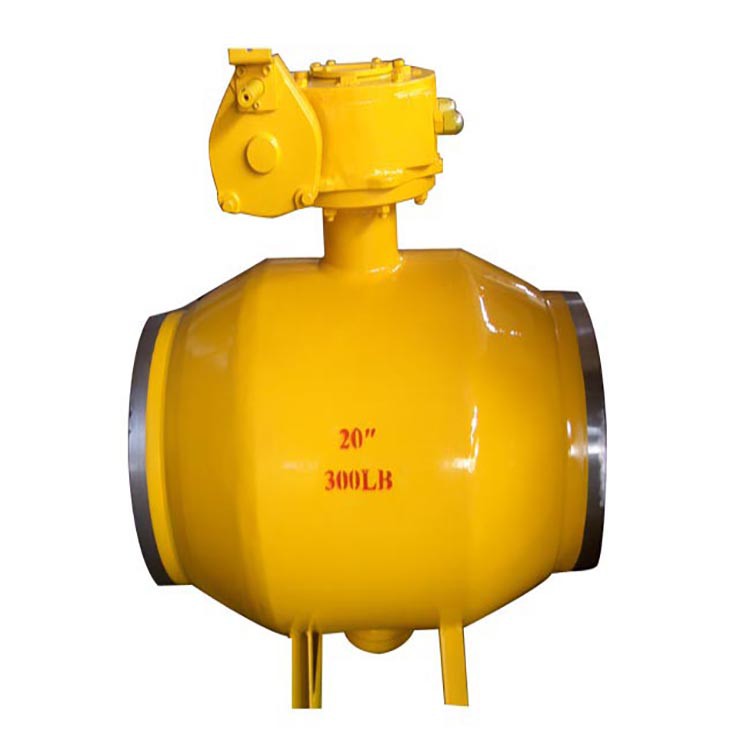
Our Full Port Welded Ball Valve is another excellent choice for fire - safe applications. The welded construction provides enhanced structural integrity, and the full - port design allows for unrestricted flow of fluids. It is also tested and certified to meet fire - safe standards, giving our customers peace of mind.
In addition, our API Ball Valve is specifically designed to meet the strict requirements of the API standards. These valves are widely used in the oil and gas industry, where fire safety is of utmost importance. They offer superior performance and reliability in fire - prone environments.
Conclusion
In conclusion, ball valves can indeed be used in fire - safe applications. With proper design, material selection, and testing, ball valves can meet the strict fire - safe requirements of various industries. As a ball valve supplier, we are committed to providing high - quality fire - safe ball valves that ensure the safety and reliability of our customers' operations.
If you are in need of ball valves for fire - safe applications, we invite you to contact us for more information and to discuss your specific requirements. Our team of experts is ready to assist you in selecting the right valve for your needs. We believe that through our products and services, we can help you achieve optimal performance and safety in your industrial processes.
References
- API 607, "Fire - Test Standard for Quarter - Turn Valves and Valve Actuators".
- API 6FA, "Specification for Fire - Tested Valves".