Hey there! As a supplier of dismantling joints, I've seen a lot of confusion out there about how to tell the different types apart. It's not always easy, especially if you're new to the game. But don't worry, I'm here to break it down for you in a way that's easy to understand.
First off, let's talk about what a dismantling joint is. In simple terms, it's a device used in piping systems to allow for easy installation, removal, and maintenance of pipes. It can absorb axial movement, lateral displacement, and angular deflection, which helps to protect the piping system from damage caused by thermal expansion, vibration, and other factors.
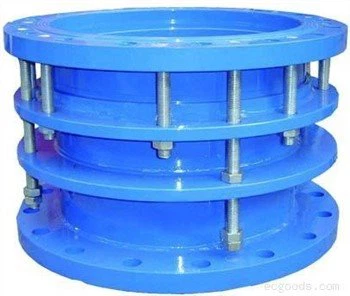
Now, let's get into the different types of dismantling joints. One of the most common types is the double flange expansion joint. You can learn more about it Double Flange Expansion Joint. This type of joint has flanges on both ends, which are bolted to the pipes. It's great for applications where you need to absorb a lot of axial movement, like in long pipelines or in systems that are subject to temperature changes. The double flange design provides a strong and stable connection, and it's relatively easy to install and maintain.
Another type is the flange pipe expansion joint. Check out Flange Pipe Expansion Joint for more details. This joint is similar to the double flange expansion joint, but it's designed to be used in situations where you need to absorb both axial and lateral movement. It has a flexible bellows section in the middle, which allows the joint to bend and stretch as needed. This makes it a good choice for piping systems that are located in areas with limited space or where there are a lot of bends and turns.
Then there's the single flange expansion joint. This one has a flange on only one end, and it's typically used in applications where you need to connect a pipe to a piece of equipment, like a pump or a valve. It's a more compact option compared to the double flange expansion joint, and it's often used in situations where space is at a premium.
Now, how can you tell these different types apart? Well, the first thing you can look at is the number of flanges. If it has flanges on both ends, it's probably a double flange expansion joint. If it has a flange on only one end, it's likely a single flange expansion joint. And if it has a flexible bellows section in the middle, it's probably a flange pipe expansion joint.
You can also look at the size and shape of the joint. Double flange expansion joints are usually larger and more robust, while single flange expansion joints are smaller and more lightweight. Flange pipe expansion joints can vary in size and shape depending on the specific application, but they typically have a more complex design due to the bellows section.
Another thing to consider is the material. Dismantling joints can be made from a variety of materials, including rubber, metal, and plastic. Rubber joints are flexible and can absorb a lot of movement, but they may not be suitable for high-pressure or high-temperature applications. Metal joints, on the other hand, are more durable and can handle higher pressures and temperatures, but they're also more expensive. Plastic joints are lightweight and corrosion-resistant, but they may not be as strong as metal or rubber joints.
When it comes to choosing the right type of dismantling joint for your application, there are a few things you need to keep in mind. First, you need to consider the amount of movement that the joint will need to absorb. If you're dealing with a lot of axial movement, a double flange expansion joint may be the best choice. If you need to absorb both axial and lateral movement, a flange pipe expansion joint might be more suitable.
You also need to think about the pressure and temperature requirements of your piping system. Make sure the joint you choose can handle the maximum pressure and temperature that the system will be subjected to. And don't forget about the chemical compatibility. If your piping system will be carrying corrosive or abrasive fluids, you'll need to choose a joint that's made from a material that can withstand those conditions.


Installation is another important factor. Some joints are easier to install than others, so you'll want to choose a joint that fits your installation skills and resources. And once the joint is installed, you'll need to make sure it's properly maintained. This includes regular inspections, cleaning, and lubrication to ensure that the joint continues to function properly.
So, there you have it - a basic guide to distinguishing between different types of dismantling joints. I hope this has been helpful to you. If you're in the market for a dismantling joint, or if you have any questions about which type is right for your application, don't hesitate to reach out. We're here to help you find the perfect solution for your piping system. Whether you're a contractor, an engineer, or a facility manager, we've got the expertise and the products to meet your needs.
If you're interested in learning more or discussing your specific requirements, feel free to get in touch. We can provide you with detailed product information, pricing, and technical support. Let's work together to ensure that your piping system runs smoothly and efficiently.
References
- Various industry standards and guidelines for piping systems
- Manufacturer's product catalogs and technical documentation