As a supplier of Rising Stem Gate Valves, I am often asked about how these valves work. In this blog post, I will provide a detailed explanation of the working mechanism of an automated Rising Stem Gate Valve, its components, and its applications.
Components of a Rising Stem Gate Valve
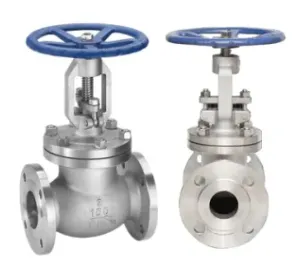
Before delving into how the valve works, it's essential to understand its key components. A typical Rising Stem Gate Valve consists of the following parts:
- Body: This is the main housing of the valve that contains the flow passage and provides a connection point for the pipeline. It is usually made of materials such as cast iron, carbon steel, or stainless steel, depending on the application requirements.
- Bonnet: The bonnet is attached to the body and encloses the stem and the internal components of the valve. It provides a seal to prevent leakage and allows for easy access to the valve internals for maintenance.
- Stem: The stem is a threaded rod that connects the handwheel or actuator to the gate. As the stem rotates, it moves the gate up or down, controlling the flow of fluid through the valve. In a Rising Stem Gate Valve, the stem rises and falls with the gate, indicating the position of the valve.
- Gate: The gate is the movable part of the valve that controls the flow of fluid. It is typically a flat or wedge-shaped disc that fits between two seats in the valve body. When the gate is fully open, it allows unrestricted flow through the valve, and when it is fully closed, it blocks the flow completely.
- Seats: The seats are the sealing surfaces in the valve body that come into contact with the gate to prevent leakage. They are usually made of materials such as rubber, PTFE, or metal, depending on the application requirements.
- Packing: The packing is a sealing material that is installed around the stem to prevent leakage of fluid along the stem. It is typically made of materials such as graphite, asbestos, or synthetic fibers.
- Actuator: In an automated Rising Stem Gate Valve, an actuator is used to control the movement of the stem and the gate. The actuator can be electric, pneumatic, or hydraulic, depending on the application requirements.
Working Mechanism of an Automated Rising Stem Gate Valve
The working mechanism of an automated Rising Stem Gate Valve can be divided into two main phases: the opening phase and the closing phase.
Opening Phase
When the valve needs to be opened, the actuator receives a signal from the control system. The actuator then rotates the stem in a clockwise direction, causing the stem to rise. As the stem rises, it pulls the gate up with it, gradually opening the valve. The position of the stem indicates the position of the gate, allowing the operator to monitor the valve's status.


As the gate moves up, it creates a gap between the gate and the seats, allowing fluid to flow through the valve. The size of the gap determines the flow rate of the fluid. When the gate is fully open, the valve provides a straight-through flow path with minimal resistance, allowing for efficient flow of fluid through the pipeline.
Closing Phase
When the valve needs to be closed, the actuator receives a signal from the control system to rotate the stem in a counterclockwise direction. As the stem rotates, it pushes the gate down, gradually closing the valve. The stem continues to rotate until the gate is fully seated between the seats, blocking the flow of fluid completely.
During the closing process, the gate comes into contact with the seats, creating a tight seal to prevent leakage. The force applied by the actuator ensures that the gate is firmly seated against the seats, providing a reliable seal even under high-pressure conditions.
Advantages of Automated Rising Stem Gate Valves
Automated Rising Stem Gate Valves offer several advantages over manual gate valves and other types of valves:
- Precise Control: An automated Rising Stem Gate Valve allows for precise control of the flow of fluid through the pipeline. The actuator can be programmed to open or close the valve to a specific position, allowing for accurate regulation of the flow rate.
- Remote Operation: Automated Rising Stem Gate Valves can be operated remotely using a control system, eliminating the need for manual intervention. This is particularly useful in applications where the valve is located in a hazardous or inaccessible area.
- Fast Operation: Automated Rising Stem Gate Valves can open and close quickly, allowing for rapid response to changes in flow conditions. This is important in applications where quick shut-off is required to prevent damage to equipment or to ensure safety.
- Reliable Sealing: The design of the Rising Stem Gate Valve provides a reliable seal between the gate and the seats, preventing leakage of fluid even under high-pressure conditions. This ensures the integrity of the pipeline and reduces the risk of environmental contamination.
- Visual Indication: The rising stem in a Rising Stem Gate Valve provides a visual indication of the position of the valve, allowing the operator to easily determine whether the valve is open or closed. This is particularly useful in applications where the valve is located in a remote or hard-to-reach area.
Applications of Automated Rising Stem Gate Valves
Automated Rising Stem Gate Valves are widely used in various industries and applications, including:
- Oil and Gas Industry: In the oil and gas industry, Rising Stem Gate Valves are used in pipelines, refineries, and offshore platforms to control the flow of oil, gas, and other fluids. They are particularly suitable for applications where high-pressure and high-temperature conditions are encountered.
- Water and Wastewater Treatment Plants: In water and wastewater treatment plants, Rising Stem Gate Valves are used to control the flow of water, sewage, and chemicals. They are often used in applications where reliable sealing and precise control are required.
- Power Generation Plants: In power generation plants, Rising Stem Gate Valves are used in steam, water, and fuel systems to control the flow of fluids. They are particularly suitable for applications where high-pressure and high-temperature conditions are encountered.
- Chemical and Petrochemical Industry: In the chemical and petrochemical industry, Rising Stem Gate Valves are used to control the flow of various chemicals and fluids. They are often used in applications where corrosion resistance and reliable sealing are required.
- Food and Beverage Industry: In the food and beverage industry, Rising Stem Gate Valves are used to control the flow of liquids and gases. They are often used in applications where hygiene and cleanliness are important.
Conclusion
Automated Rising Stem Gate Valves are an important component in many industrial and commercial applications. Their precise control, remote operation, fast operation, reliable sealing, and visual indication make them a popular choice for controlling the flow of fluid through pipelines. As a supplier of Rising Stem Gate Valves, we offer a wide range of valves to meet the needs of different applications. If you are interested in learning more about our F5 Gate Valve, Non Rising Stem Groove Resilient Gate Valve, or Resilient Seated Gate Valve, or if you have any questions about our products, please feel free to contact us for further discussion and potential procurement opportunities.
References
- Valve Handbook, CRC Press
- Pipeline Valve Technology, Elsevier
- Industrial Valves: Selection, Specification, and Installation, McGraw-Hill