The casting process is a critical factor that significantly influences the quality of a Cast Iron Y Strainer. As a supplier of Cast Iron Y Strainers, I have witnessed firsthand how different aspects of the casting process can either enhance or detract from the overall performance and durability of these essential industrial components. In this blog post, I will delve into the various ways in which the casting process affects the quality of a Cast Iron Y Strainer, exploring key factors such as material selection, casting method, and post-casting treatments.
Material Selection
The choice of material is the foundation of the casting process and has a profound impact on the quality of the final product. Cast iron is a popular choice for Y strainers due to its excellent strength, durability, and resistance to corrosion. However, not all cast irons are created equal, and the specific type of cast iron used can greatly affect the performance of the strainer.
Gray cast iron is one of the most commonly used materials for Cast Iron Y Strainers. It is known for its good machinability, high damping capacity, and relatively low cost. However, gray cast iron has lower tensile strength and ductility compared to other types of cast iron, which can make it more prone to cracking and failure under high-stress conditions.
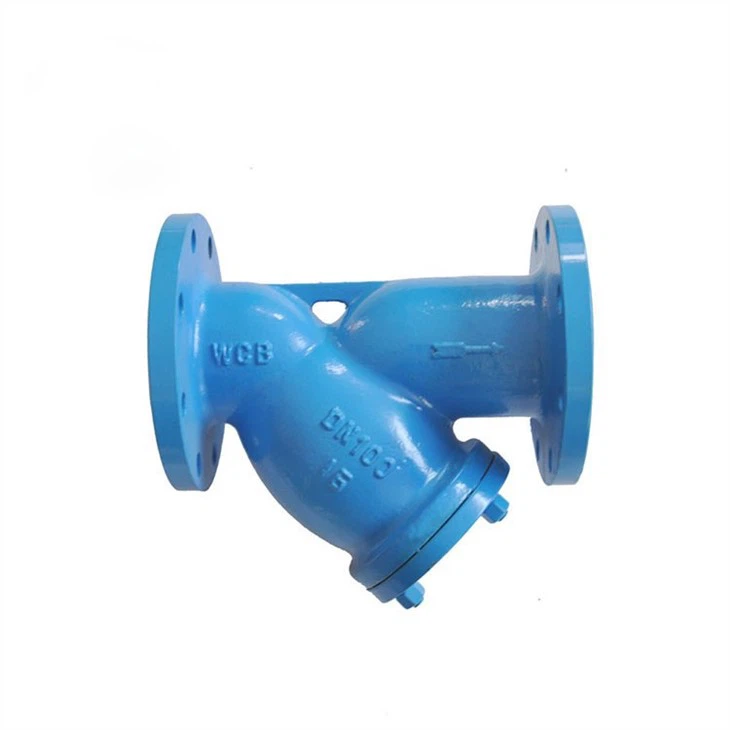
Ductile cast iron, on the other hand, offers superior mechanical properties, including higher tensile strength, ductility, and impact resistance. It is also more resistant to corrosion and wear, making it an ideal choice for applications where the strainer will be exposed to harsh environments or high-pressure fluids. Our Ductile Iron Y Type Strainer Double Flange Water DIN/JIS/ASME/ASTM/GB is made from high-quality ductile cast iron, ensuring reliable performance and long service life.

Casting Method
The casting method used to produce the Cast Iron Y Strainer also plays a crucial role in determining its quality. There are several casting methods available, each with its own advantages and disadvantages.
Sand casting is the most common casting method for Cast Iron Y Strainers. It involves creating a mold from sand and pouring molten cast iron into the mold to form the desired shape. Sand casting is a relatively inexpensive and versatile method that can produce complex shapes with high precision. However, it can also result in some surface roughness and porosity, which can affect the performance and appearance of the strainer.
Investment casting, also known as lost-wax casting, is a more precise and expensive casting method. It involves creating a wax pattern of the strainer, coating the pattern with a ceramic shell, and then melting the wax out of the shell to create a mold. Investment casting can produce strainers with very smooth surfaces and high dimensional accuracy, making it ideal for applications where a high level of precision is required. However, it is a more time-consuming and expensive process compared to sand casting.
Die casting is another casting method that is commonly used for producing Cast Iron Y Strainers. It involves injecting molten cast iron into a die under high pressure to form the desired shape. Die casting can produce strainers with high production rates and excellent dimensional accuracy. However, it is limited to producing relatively small and simple shapes, and it can also result in some internal porosity and residual stresses.
Post-Casting Treatments
After the casting process is complete, the Cast Iron Y Strainer may undergo several post-casting treatments to improve its quality and performance. These treatments can include heat treatment, machining, and surface finishing.
Heat treatment is a process that involves heating the cast iron to a specific temperature and then cooling it at a controlled rate to improve its mechanical properties. Heat treatment can increase the strength, hardness, and ductility of the cast iron, as well as reduce its internal stresses and improve its resistance to corrosion.
Machining is a process that involves removing excess material from the cast iron to achieve the desired shape and dimensions. Machining can improve the accuracy and surface finish of the strainer, as well as ensure a proper fit with other components in the system.
Surface finishing is a process that involves applying a coating or treatment to the surface of the cast iron to improve its appearance and resistance to corrosion. Surface finishing can include painting, galvanizing, or applying a protective coating.
Impact on Quality
The casting process can have a significant impact on the quality of a Cast Iron Y Strainer in several ways. Firstly, the choice of material and casting method can affect the mechanical properties of the strainer, such as its strength, ductility, and impact resistance. A high-quality cast iron and a precise casting method can result in a strainer that is more durable and reliable, while a low-quality material or an improper casting method can lead to a strainer that is prone to cracking, failure, and corrosion.
Secondly, the casting process can affect the dimensional accuracy and surface finish of the strainer. A precise casting method and proper machining can ensure that the strainer has the correct dimensions and a smooth surface finish, which can improve its performance and compatibility with other components in the system. On the other hand, a rough or inaccurate casting can result in a strainer that does not fit properly or has a poor seal, which can lead to leaks and reduced efficiency.
Finally, the post-casting treatments can further enhance the quality of the strainer by improving its mechanical properties, reducing its internal stresses, and protecting it from corrosion. Heat treatment can increase the strength and hardness of the cast iron, while machining can improve its accuracy and surface finish. Surface finishing can also provide an additional layer of protection against corrosion and wear, extending the service life of the strainer.
Conclusion
In conclusion, the casting process is a critical factor that significantly affects the quality of a Cast Iron Y Strainer. As a supplier of Cast Iron Y Strainers, we understand the importance of using high-quality materials, precise casting methods, and proper post-casting treatments to ensure the reliability and performance of our products. Our Ductile Iron Y Type Strainer Double Flange Water DIN/JIS/ASME/ASTM/GB, PN16 Y Type Filter, and Flange Connection Stainless Steel Y Strainer With Ss Filter are all manufactured using the latest casting technology and high-quality materials, ensuring the highest level of quality and performance.
If you are in the market for a high-quality Cast Iron Y Strainer, we invite you to contact us to discuss your specific requirements. Our team of experts will be happy to provide you with more information about our products and services, and to help you find the perfect solution for your application.
References
- Campbell, J. (2003). Castings. Butterworth-Heinemann.
- Kalpakjian, S., & Schmid, S. R. (2008). Manufacturing Engineering and Technology. Pearson Prentice Hall.
- Metals Handbook: Casting. (1988). ASM International.