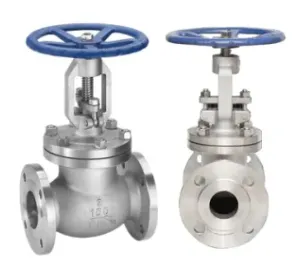
As a gate valve supplier, understanding how to measure the Cv value of a gate valve is crucial. The Cv value, or flow coefficient, is a measure of a valve's ability to pass fluid. It is defined as the number of US gallons per minute of water at 60°F that will flow through a valve with a pressure drop of 1 psi across the valve. In this blog post, I will guide you through the process of measuring the Cv value of a gate valve.
Understanding the Importance of Cv Value
The Cv value is an essential parameter in valve selection. It helps engineers and system designers to choose the right valve for a specific application. A valve with a higher Cv value can pass more fluid at a given pressure drop, while a valve with a lower Cv value restricts the flow more. By accurately measuring the Cv value, we can ensure that the gate valve meets the flow requirements of the system.
Theoretical Basis for Cv Measurement
The formula for calculating the Cv value is based on the principles of fluid mechanics. The basic formula for Cv is:
[Cv = \frac{Q}{\sqrt{\Delta P}}]
where (Q) is the flow rate in US gallons per minute (GPM) and (\Delta P) is the pressure drop across the valve in psi.
However, this formula is a simplified version. In real - world applications, factors such as fluid viscosity, valve size, and valve type need to be considered. For gate valves, the flow characteristics are affected by the valve's opening degree. When the gate valve is fully open, the flow path is relatively straight, and the valve offers low resistance to flow. As the valve begins to close, the flow area decreases, and the resistance to flow increases.
Experimental Setup for Measuring Cv
To measure the Cv value of a gate valve, we need to set up an experimental rig. The following equipment is required:
- Flow Meter: A device to measure the flow rate of the fluid passing through the valve. There are different types of flow meters available, such as electromagnetic flow meters, turbine flow meters, and ultrasonic flow meters. The choice of flow meter depends on the type of fluid, flow rate range, and accuracy requirements.
- Pressure Gauges: Two pressure gauges are needed to measure the pressure upstream and downstream of the valve. These gauges should be accurate and calibrated regularly.
- Pump: A pump is used to create the flow of fluid through the valve. The pump should be able to provide a stable flow rate.
- Test Section: A pipe section where the valve is installed. The pipe should be of the same diameter as the valve to ensure accurate measurement.
Step - by - Step Measurement Process
- Installation: Install the gate valve in the test section. Make sure that the valve is properly aligned and sealed to prevent any leakage. Connect the flow meter and pressure gauges to the appropriate locations in the pipeline.
- Initial Checks: Before starting the measurement, check all the equipment to ensure that it is working properly. Calibrate the flow meter and pressure gauges if necessary.
- Start the Pump: Start the pump and gradually increase the flow rate to the desired level. Allow the system to stabilize for a few minutes to ensure that the flow rate and pressure are constant.
- Record Data: Record the flow rate (Q) from the flow meter and the pressure drop (\Delta P) across the valve (the difference between the upstream and downstream pressures). Take multiple readings at different flow rates to get a comprehensive understanding of the valve's flow characteristics.
- Calculate Cv: Using the formula (Cv=\frac{Q}{\sqrt{\Delta P}}), calculate the Cv value for each set of data points. Plot the Cv values against the flow rate or valve opening degree to analyze the relationship.
Factors Affecting Cv Measurement
- Valve Opening Degree: As mentioned earlier, the Cv value of a gate valve changes with the opening degree. When the valve is fully open, the Cv value is at its maximum. As the valve closes, the Cv value decreases.
- Fluid Properties: The viscosity and density of the fluid can affect the Cv value. For non - Newtonian fluids, the flow behavior is more complex, and the Cv value may not follow the simple formula.
- Pipe Fittings: The presence of pipe fittings such as elbows, tees, and reducers near the valve can cause additional pressure losses and affect the accuracy of the Cv measurement.
Our Gate Valve Products and Cv
At our company, we offer a wide range of gate valves, including Resilient Seated Gate Valve, F4 Gate Valve F4, and Cast Iron Brass Sealed Rising Stem Gate Valves. Each of these valves has been carefully tested to determine its Cv value under different operating conditions.


For example, our Resilient Seated Gate Valve is designed to provide a high Cv value when fully open, ensuring efficient flow in water supply systems. The F4 Gate Valve F4 is suitable for more demanding applications, and its Cv value is optimized for high - pressure and high - flow scenarios. The Cast Iron Brass Sealed Rising Stem Gate Valves offer reliable performance with a well - defined Cv value, making them ideal for industrial applications.
Conclusion
Measuring the Cv value of a gate valve is a complex but essential process. By following the proper experimental procedures and considering the factors that affect the Cv value, we can accurately determine the flow characteristics of the valve. As a gate valve supplier, we are committed to providing high - quality valves with well - defined Cv values to meet the diverse needs of our customers.
If you are interested in our gate valve products or need more information about Cv measurement, please feel free to contact us for procurement and further discussion. We look forward to serving you.
References
- Crane Co., "Flow of Fluids Through Valves, Fittings, and Pipe", Technical Paper No. 410.
- ASME MFC - 3M - 2004, "Measurement of Fluid Flow in Closed Conduits Using Transit - Time Ultrasonic Flow Meters".
- ISO 5167 - 1:2003, "Measurement of fluid flow by means of pressure differential devices inserted in circular cross - section conduits running full".