Yo, folks! As a supplier of ANSI Gate Valves, I've been in the valve game for quite a while, and I know how crucial it is to pick the right materials, especially when it comes to dealing with cavitation and erosion. So, let's dive into what these cavitation and erosion resistant materials are all about for ANSI Gate Valves.


First off, let's talk about what cavitation and erosion actually are. Cavitation happens when the pressure of a liquid drops below its vapor pressure, causing vapor bubbles to form. These bubbles then collapse when they move to a higher - pressure area, creating shockwaves that can damage the valve surface. Erosion, on the other hand, is the wearing away of the valve material due to the flow of fluid, often containing solid particles.
Now, let's get into the materials that can stand up to these challenges.
Stainless Steel
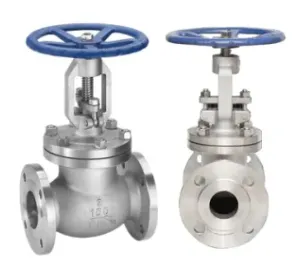
Stainless steel is a go - to material for many ANSI Gate Valves. It's got excellent corrosion resistance, which is a big plus when dealing with fluids that might be a bit harsh. The chromium in stainless steel forms a passive oxide layer on the surface, protecting it from further corrosion. For example, 316 stainless steel is often used in applications where there's exposure to seawater or other corrosive environments. It can also handle some level of cavitation and erosion. The high strength and toughness of stainless steel mean that it can withstand the shockwaves from cavitation bubble collapse better than some other materials. You can check out our Rising Stem Flanged Gate Valve Z41H, which is available in stainless steel options.
Nickel - Based Alloys
Nickel - based alloys are another great choice. Alloys like Inconel and Hastelloy have outstanding resistance to both corrosion and erosion. They can maintain their mechanical properties at high temperatures, making them suitable for applications where the fluid is hot. Inconel, for instance, has high strength and good oxidation resistance. It's often used in applications such as chemical processing plants, where the fluids can be extremely corrosive. The nickel content in these alloys provides a stable matrix that can resist the wear and tear caused by cavitation and erosion. If you're looking for a valve that can handle tough conditions, our Manual Rising Stem Knife Gate Valves can be customized with nickel - based alloy components.
Ceramic
Ceramics are becoming more popular in valve applications because of their exceptional hardness and wear resistance. They can handle high - velocity fluid flow and are very resistant to erosion. For example, alumina ceramics are known for their high strength and low friction coefficient. They can reduce the damage caused by the movement of solid particles in the fluid. However, ceramics are brittle, so they need to be carefully designed and installed to avoid cracking. But when used correctly, they can significantly extend the lifespan of a gate valve in cavitation - and erosion - prone environments.
Hard - Faced Alloys
Hard - faced alloys are applied as a coating on the valve's critical surfaces, such as the seat and the disc. Materials like Stellite are commonly used for this purpose. Stellite has high hardness and good wear resistance. By applying a Stellite coating, you can enhance the valve's ability to resist cavitation and erosion. It acts as a sacrificial layer, taking the brunt of the damage instead of the base material. This can be a cost - effective way to improve the performance of an ANSI Gate Valve. Our Non stem Flanged Gate Valve Z45H can be equipped with hard - faced alloy coatings for better protection.
Titanium
Titanium is a lightweight yet strong material with excellent corrosion resistance. It's particularly useful in applications where weight is a concern, such as in marine or aerospace applications. Titanium has a high strength - to - weight ratio, and it can resist the effects of cavitation and erosion in many environments. However, it can be more expensive than some other materials, so it's usually used in specific applications where its unique properties are really needed.
When choosing the right material for your ANSI Gate Valve, you need to consider several factors. The type of fluid flowing through the valve is crucial. Is it a corrosive chemical, a high - velocity gas, or a fluid with solid particles? The temperature and pressure of the system also play a big role. High - temperature applications might require materials that can maintain their strength and integrity under heat. And of course, your budget is a factor. Some materials, like ceramics and nickel - based alloys, can be more expensive, but they might offer a longer lifespan and better performance in the long run.
If you're in the market for ANSI Gate Valves and need help choosing the right cavitation and erosion resistant materials, I'm here to assist. Whether you're looking for a Manual Rising Stem Knife Gate Valves, a Rising Stem Flanged Gate Valve Z41H, or a Non stem Flanged Gate Valve Z45H, we've got a range of options to suit your needs. Don't hesitate to reach out for a chat about your requirements and we can work together to find the perfect valve solution for you.
References
- ASM Handbook Volume 13A: Corrosion: Fundamentals, Testing, and Protection
- Valve Handbook by Robert A. Smith
- Material Science and Engineering: An Introduction by William D. Callister, Jr. and David G. Rethwisch