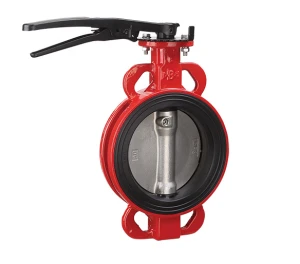
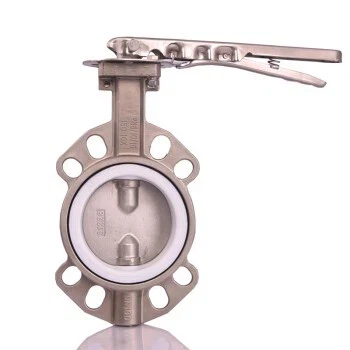
The devices that can control the fluid flow in the pipeline by changing the cross section of the pipeline are called valves or valve parts. The main function of the valve in the pipeline is to connect or cut off the medium; prevent the medium from flowing back; adjust the pressure and flow parameters of the medium; separate, mix or distribute the medium; prevent the medium pressure from exceeding the specified value to keep the road or container 1. Safety of equipment.
With the development of modern science and technology, valves are increasingly used in industry, construction, agriculture, national defense, scientific research and people's lives, and have become an indispensable general mechanical product in various fields of human activities.
Valves have a wide range of applications in pipeline engineering. Due to the different purposes, the types of valves are diverse. Especially in recent years, new structures, new materials and new uses of valves have been continuously developed. In order to unify the manufacturing standards, and to correctly select and identify the valves, in order to facilitate production, installation and replacement, the valve specifications are developing towards standardization, generalization, and serialization.
Valve classification:
The industrial valve was born after the invention of the steam engine. In the past two or three decades, due to the needs of petroleum, chemical industry, power station, metallurgy, shipbuilding, nuclear energy, aerospace, etc., higher requirements have been put on the valve, making people research and produce high The working temperature of the valve with parameters is from ultra-low temperature-269 ℃ to high temperature 1200 ℃ and even up to 3430 ℃; working pressure is from ultra-vacuum 1.33 × 10⁻⁸Pa (1 × 10¯10mmHg) to ultra-high pressure 1460MPa;
The diameter of the valve ranges from 1mm to 6000mm, and even reaches 9750mm. The material of the valve has developed from cast iron and carbon steel to titanium and titanium alloy steel, as well as high-strength corrosion-resistant steel, low-temperature steel and heat-resistant steel valves. The drive mode of the valve has been developed from electric to pneumatic, hydraulic, to program control, data control, remote control, etc. The processing technology of valves also ranges from ordinary machine tools to assembly lines and automatic lines.