The design of a valve's body is a critical factor that significantly influences its strength and durability. As a trusted Butterfly Valve supplier, we understand the importance of these aspects in providing reliable and long - lasting valve solutions. In this blog, we will explore how different body designs of butterfly valves impact their strength and durability.
Material Selection in Body Design
The choice of material for the valve body is the first step in determining its strength and durability. Common materials used in butterfly valve bodies include ductile iron, stainless steel, and carbon steel.
Ductile iron is a popular choice due to its excellent castability, good mechanical properties, and relatively low cost. It has high tensile strength and ductility, which allows it to withstand significant pressure and stress without cracking. Our Efficient Ductile Iron Body And Concentric Design Wafer Butterfly Valve showcases the benefits of using ductile iron. The ductile iron body provides a solid foundation, ensuring the valve can operate effectively in various industrial applications, such as water treatment plants and HVAC systems.
Stainless steel, on the other hand, offers superior corrosion resistance. In harsh environments where the valve is exposed to corrosive substances, such as chemicals or saltwater, stainless steel is the ideal choice. Its high chromium content forms a passive oxide layer on the surface, protecting the valve body from rust and degradation. This makes stainless - steel butterfly valves suitable for applications in the chemical, marine, and food processing industries.
Carbon steel is known for its high strength and toughness. It can handle high - pressure and high - temperature applications, making it a common choice for power generation plants and oil and gas pipelines. However, carbon steel is more prone to corrosion compared to stainless steel, so proper coating or lining is often required to enhance its durability.
Structural Design and Strength
The structural design of the valve body plays a crucial role in its strength. The shape and thickness of the body are carefully engineered to distribute stress evenly and withstand the forces exerted during operation.
One of the key structural features of a butterfly valve is the disc - to - body connection. A well - designed connection ensures that the disc can rotate smoothly within the body while maintaining a tight seal. In some designs, the disc is supported by a shaft that runs through the center of the valve body. The diameter and material of the shaft are selected based on the valve's size and the operating conditions. A larger - diameter shaft can provide more support and reduce the risk of bending or breaking under high pressure.
The body of a butterfly valve can also be designed with ribs or reinforcements. These structural elements increase the stiffness of the body, allowing it to resist deformation. For example, in our Flange Butterfly Valves For Vessel, the valve body is designed with strategic ribbing to enhance its strength. This design is particularly important in vessel applications where the valve may be subjected to external forces and vibrations.
Sealing Design and Durability
The sealing performance of a butterfly valve is closely related to its durability. A good sealing design not only prevents leakage but also reduces wear and tear on the valve components.
There are two main types of sealing in butterfly valves: concentric and eccentric. Concentric butterfly valves have a disc that is centered within the body, and the sealing surface is perpendicular to the axis of the valve. This design provides a simple and effective seal, but it may be more prone to wear over time, especially in high - pressure applications.
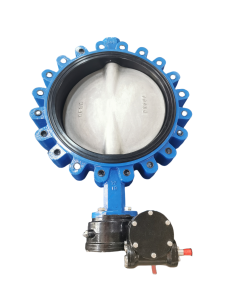
Eccentric butterfly valves, on the other hand, have a disc that is offset from the center of the body. This design allows for a more uniform contact between the disc and the seat, reducing friction and wear. The eccentric design also provides a better seal at high pressures, making it suitable for demanding applications. Our Wafer Lug Type Butterfly Valve, Gear Box Operator utilizes an eccentric sealing design, which enhances its durability and sealing performance.
The material of the seat is another important factor in sealing and durability. Common seat materials include elastomers, such as EPDM and NBR, and PTFE. Elastomer seats provide a good seal and are resistant to wear, but they may have limitations in high - temperature or chemical - resistant applications. PTFE seats, on the other hand, offer excellent chemical resistance and can withstand higher temperatures, but they may be more expensive.
Manufacturing Processes and Quality Control
The manufacturing processes used to produce the valve body also affect its strength and durability. Precision machining is essential to ensure that the valve components fit together accurately and that the sealing surfaces are smooth and flat.
Casting is a common method for producing valve bodies. During the casting process, the molten metal is poured into a mold to form the desired shape. The quality of the casting depends on factors such as the purity of the metal, the temperature control, and the design of the mold. A well - cast valve body will have a uniform structure and fewer defects, which is crucial for its strength and durability.
After casting, the valve body may undergo additional processes, such as heat treatment and surface finishing. Heat treatment can improve the mechanical properties of the metal, such as hardness and toughness. Surface finishing, such as painting or coating, can protect the valve body from corrosion and wear.
Quality control is an integral part of the manufacturing process. At our company, we have strict quality control measures in place to ensure that every valve meets the highest standards. We conduct various tests, including pressure testing, leakage testing, and material analysis, to verify the performance and quality of our butterfly valves.

Impact of Operating Conditions
The operating conditions of a butterfly valve can have a significant impact on its strength and durability. Factors such as pressure, temperature, flow rate, and the nature of the fluid being handled all need to be considered.
High - pressure applications require valves with stronger bodies and more robust sealing mechanisms. The valve body must be able to withstand the internal pressure without deforming or failing. In high - temperature applications, the material of the valve body and seat must be able to maintain their mechanical properties. For example, some high - temperature applications may require the use of special alloys or ceramic materials.
The flow rate and the nature of the fluid can also affect the valve's durability. Fluids with high particulate content can cause erosion and abrasion on the valve components, especially the disc and seat. In such cases, valves with hardened surfaces or wear - resistant coatings may be required.
Conclusion
In conclusion, the body design of a butterfly valve has a profound impact on its strength and durability. From material selection to manufacturing processes and operating conditions, every aspect needs to be carefully considered to ensure that the valve can perform reliably over its service life.
As a leading Butterfly Valve supplier, we are committed to providing high - quality valves that meet the diverse needs of our customers. Our valves are designed and manufactured with the latest technology and strict quality control measures to ensure optimal performance and durability.
If you are in the market for butterfly valves and want to learn more about our products or discuss your specific requirements, we invite you to contact us for a procurement consultation. We look forward to working with you to find the best valve solutions for your applications.
References
- Valve Handbook, Crane Co.
- Industrial Valves: Selection, Specification, and Installation, Peter A. Schweitzer.
- ASME Standards for Valves and Fittings.