Hey there! As a supplier of Rising Stem Gate Valves, I often get asked about the differences between Rising Stem Gate Valves and plug valves. So, I thought I'd take a few minutes to break it down for you.
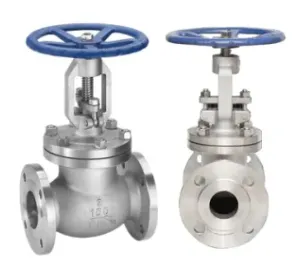
Let's start with the Rising Stem Gate Valve. I mean, it's what I deal with every day, so I know it inside out. A Rising Stem Gate Valve is a type of valve that uses a gate - like disc to control the flow of fluid through a pipe. The stem of this valve rises and falls as the valve is opened or closed. When you turn the handwheel or operate the actuator, the stem moves linearly, lifting the gate out of the flow path to open the valve or lowering it back down to block the flow.
One of the main advantages of a Rising Stem Gate Valve is its full - port design. This means that when the valve is fully open, the bore of the valve is the same size as the pipe, allowing for unrestricted flow. There's hardly any resistance to the fluid, so it's great for applications where you need a high flow rate. For example, in water supply systems, these valves can ensure a smooth and efficient flow of water. And if you're interested in a specific type, we have the Resilient Seated Gate Valve, which offers excellent sealing performance and is corrosion - resistant.
Another cool thing about Rising Stem Gate Valves is that you can easily tell whether the valve is open or closed just by looking at the position of the stem. If the stem is extended, the valve is open, and if it's retracted, the valve is closed. This visual indication is really handy, especially in large industrial settings where quick and accurate valve status checks are crucial.
Now, let's talk about our Ductile Cast Iron DN50 - 200 Groove Type Rising Stem Wedge Gate Valve For Fire Fighting. This valve is specifically designed for fire - fighting systems. The ductile cast iron construction makes it strong and durable, able to withstand high pressures. The groove type connection is easy to install and provides a reliable seal, ensuring that the valve can perform well when it matters most in a fire emergency.
On the other hand, we have plug valves. Plug valves use a cylindrical or conical plug to control the flow. The plug has a passage through it, and by rotating the plug, you can either align the passage with the pipe to allow flow or turn it so that the solid part of the plug blocks the flow.
One of the key differences between Rising Stem Gate Valves and plug valves is the way they operate. Rising Stem Gate Valves have a linear motion, while plug valves have a rotational motion. This rotational operation of plug valves can be quicker in some cases. You can open or close a plug valve with just a quarter - turn in some designs. This makes them suitable for applications where rapid shut - off is required, like in some chemical processing plants where you need to stop the flow of a hazardous substance immediately.
However, plug valves have some limitations. They usually have a reduced port. That means the flow area through the valve is smaller than the pipe diameter, which can cause some flow restrictions. This reduced flow capacity might not be ideal for applications that demand high - volume flow.
Another aspect to consider is the sealing mechanism. Rising Stem Gate Valves often use a wedge - shaped gate that provides a tight seal against the valve seats. In contrast, plug valves rely on the contact between the plug and the valve body for sealing. Over time, the plug can wear out, and the sealing performance may degrade, especially in abrasive or high - temperature environments.
Let's also take a look at maintenance. Rising Stem Gate Valves are relatively easy to maintain. The gate and stem assembly can be easily accessed for inspection and repair. And if you need to replace a part, it's usually straightforward. For instance, our Non stem Flanged Gate Valve Z45H is designed for easy maintenance, with flanged connections that make it simple to disassemble and reassemble.
Plug valves, on the other hand, can be a bit more challenging to maintain. The plug needs to be carefully machined and lubricated to ensure proper operation. If the plug gets stuck or the lubrication dries up, it can be difficult to open or close the valve.
In terms of cost, Rising Stem Gate Valves are generally more cost - effective for large - scale applications where high - flow capacity is required. Plug valves, with their more complex design and the need for special materials in some cases, can be more expensive, especially for larger sizes.
So, in summary, if you're looking for a valve with high - flow capacity, easy visual status indication, and relatively simple maintenance, a Rising Stem Gate Valve is a great choice. It's well - suited for water supply, sewage treatment, and many industrial applications. On the other hand, if you need a valve for rapid shut - off and the flow capacity isn't the main concern, a plug valve might be more appropriate.
If you're in the market for a Rising Stem Gate Valve or have any questions about the differences between these two types of valves, don't hesitate to reach out. We're here to help you make the right choice for your specific application. Whether you're a small - scale business or a large industrial facility, we can provide you with the best valve solutions.


References
- Valve Handbook: Principles, Selection, and Sizing by J. Paul Tullis
- Industrial Valves: A Practical Guide by Peter M. Neves