Hey there! As a supplier of ANSI Gate Valves, I often get asked about the materials commonly used to make these valves. So, I thought I'd write this blog to share some insights on the topic.
1. Cast Iron
Cast iron is one of the most traditional materials for making gate valves. It's been around for ages, and there's a good reason for that. First off, it's super affordable. If you're on a tight budget and need a valve for a less - critical application, cast iron is a great choice.
It also has good corrosion resistance in certain environments. For example, in water supply systems where the water isn't overly aggressive, cast iron gate valves can last a long time. However, it's not the best option for highly corrosive substances like strong acids or some industrial chemicals.
Cast iron is relatively heavy, which can be both a pro and a con. On the plus side, its weight gives it stability and durability. But on the downside, it can make installation a bit more challenging, especially in hard - to - reach areas.
2. Ductile Iron
Ductile iron is an upgraded version of cast iron. It has better mechanical properties, especially in terms of ductility. This means it can bend a bit without breaking, which is a huge advantage in applications where there might be some movement or vibration.
Like cast iron, ductile iron is also cost - effective. It offers good corrosion resistance, and it can handle a wider range of pressures compared to regular cast iron. Many water and sewage systems use ductile iron gate valves because they can withstand the pressure and the somewhat corrosive nature of the fluids.
3. Carbon Steel
Carbon steel is a popular choice for gate valves, especially in industrial settings. It's strong and can handle high pressures and temperatures. If you're dealing with steam, oil, or gas in an industrial plant, carbon steel gate valves are often the go - to option.
One of the great things about carbon steel is its weldability. This makes it easy to install and repair. However, carbon steel is prone to corrosion, especially in wet or humid environments. So, it usually needs some form of protective coating, like paint or galvanization, to extend its lifespan.
You can check out our Steel Square Gate for an example of a high - quality carbon steel gate valve.
4. Stainless Steel
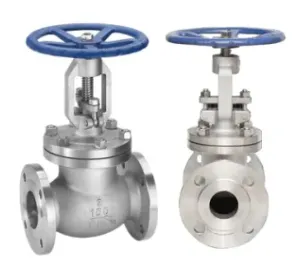
Stainless steel is known for its excellent corrosion resistance. It contains chromium, which forms a passive oxide layer on the surface, protecting the metal from rust and other forms of corrosion. This makes stainless steel gate valves ideal for applications where the fluid is corrosive, such as in chemical processing plants or marine environments.
Stainless steel also has a nice aesthetic appearance, which can be a plus in some applications where the valve is visible. However, it's more expensive than carbon steel or iron - based materials. But if corrosion resistance is your top priority, the extra cost is often worth it.
5. Alloy Steel
Alloy steel is made by adding other elements like nickel, molybdenum, or vanadium to carbon steel. This gives it enhanced properties such as higher strength, better heat resistance, and improved corrosion resistance in specific environments.
Alloy steel gate valves are commonly used in high - temperature and high - pressure applications, like in power plants or refineries. They can handle extreme conditions that would quickly damage other types of valves.
6. Bronze
Bronze is an alloy of copper and tin, and it has been used for valve manufacturing for a long time. It has good corrosion resistance, especially in freshwater and some mildly corrosive chemicals.
Bronze gate valves are often used in plumbing systems, especially in older buildings. They are relatively easy to machine, which means they can be made with precise dimensions. However, they are not as strong as steel - based materials, so they are usually used in low - pressure applications.
7. Plastic
Plastic gate valves are becoming more popular, especially in applications where weight is a concern or where corrosion is a major issue. Materials like PVC (polyvinyl chloride), CPVC (chlorinated polyvinyl chloride), and PTFE (polytetrafluoroethylene) are commonly used.
PVC and CPVC are lightweight, affordable, and have good corrosion resistance in many chemical and water - based applications. PTFE, on the other hand, is known for its excellent chemical resistance and low friction, which makes it suitable for applications where the fluid is highly corrosive or where a smooth flow is required.
8. Special Alloys
In some very specific and extreme applications, special alloys are used. For example, in the aerospace or nuclear industries, where the valves need to withstand extremely high temperatures, radiation, and corrosive environments, alloys like Inconel or Hastelloy might be used.
These alloys are extremely expensive and require specialized manufacturing processes, but they offer performance that other materials simply can't match.
When choosing the right material for an ANSI gate valve, you need to consider several factors. First, think about the fluid that the valve will be handling. Is it corrosive, abrasive, or high - temperature? Second, consider the pressure and temperature conditions. High - pressure and high - temperature applications will require stronger and more heat - resistant materials.


Cost is also an important factor. You don't want to over - spend on a valve if a less expensive material will do the job. And finally, think about the installation and maintenance requirements. Some materials are easier to install and repair than others.
We offer a wide range of ANSI gate valves made from different materials to meet your specific needs. Whether you're looking for a Flat Gate Valve or an F5 Gate Valve, we've got you covered.
If you're interested in purchasing ANSI gate valves or have any questions about the materials and their suitability for your application, don't hesitate to reach out. We're here to help you make the right choice and ensure that your valve works perfectly for your needs.
References
- Valve Handbook, by Robert W. McKetta
- Materials Science and Engineering: An Introduction, by William D. Callister Jr. and David G. Rethwisch